|
|
|
This thread is locked; no one can reply to it.


|
1
2
|
| Apparently smart people are the true idiots. |
|
Chris Katko
Member #1,881
January 2002
 |
This is a 4.4MB C# source file for A Game About A Dragon... which is on Steam. It's not even the entire game. 107K lines. No loops. The author didn't know about loops and to my absolute horror the update function calls itself in order to "loop". Read that again. In order to loop, it throws another function onto the stack. How it doesn't crash immediately, I have no freaking idea. You'll also notice a lack of classes, as well as far as I can tell, arrays. Tons of global variables. The "update" function is 95,000 lines long. Also, apparently the award winning game Undertale has a switch statement that's over 1,728 lines long. Here we are, wasting all this time trying to learn elegant ways to control code rot in our codebases, and caveman are running around smashing two rocks together and getting on Steam. On the bright side, I do feel a little better that my code isn't that horrific. But I'm also not making any money off my games. -----sig: |
|
Mark Oates
Member #1,146
March 2001
 |
Everything you've said is 100% true. The priority of software development is not on code quality, but your ability to ship. Globals, data structures, languages, paradigms, OOP, etc. is important, but if you can't get past holding on to absolute rules then it will hold you back. I think I'm less productive when I try to write perfect software. Some of the most successful code I've written was before I learned that I was doing it wrong. To offer an alternative to your examples, people were raving about how amazing the original Doom source was when it was released. -- |
|
Bruce Pascoe
Member #15,931
April 2015
 |
It looks like the Update function calls itself at the end of the function block. The C# compiler is probably smart enough to convert it to a tailcall. Basically, it's a lucky accident that it works at all. But yeah, that's... well, to quote Dave Strider of Homestuck fame: Quote: that is horrendous I can't give the coder too much flak. He at least acknowledges how bad it is. Hell, I wrote code like that when I first started out with QBasic, all those years ago. We were all newbies once. Reminds me of the VB code my cousin used to write. Then I taught him about object-oriented programming and loops and it got much better.
|
|
l j
Member #10,584
January 2009
 |
There's no recursion of any kind in that code. It's calling the super class' update method.
|
|
RPG Hacker
Member #12,492
January 2011
 |
Kinda reminds me of Amazing Tetris, my first completed game written in Free Pascal. It probably wasn't THIS bad, but I didn't know about OOP back then, so no classes or inheritance in the entire code (which, to be fair, probably isn't even that much of a problem in a Tetris game, which barely benefits from inheritance in the first place). Also had a ridiculously long main.pas file, where like 90% of my game update code were, including the complete options menu (and pretty much any other menu). Honestly, I still somewhat have the habbit of making really long source files and functions. I only ever split code into multiple functions when I'm actually reusing it somewhere. In a Tron-like racing game I programmed at Games Academy, almost all of the update code of my main player class was just a single lage update() function with almost no functions. Regarding the time argument, yeah, that's a huge factor. There are major differences between code I write at work with limited time, code I write at home for fun and code I write at home for "serious" stuff and plan to reuse later. For the first category of code, functionality usually is the most important thing and there just isn't always enough time to put in the effort of making the code prettier, cleaner and more readable. For the second category, there is enough time, but no real necessity for write good and reusable code, so "everything goes". For the third category, there IS a necessity for writing good code, as well as enough time, so here I usually write the best kind of code, which means often going back to old code to making it prettier and better. Of course this also means slow progress, but that's worth it, since those are kind of my "dream projects". The real problem here is rather how often I completely restart a project because I decide that the current project in the current state just doesn't suit my needs anymore. Happened all too many times. With my current project, I'm on a good course, though.
|
|
Kris Asick
Member #1,424
July 2001
|
Making a game does not indicate someone's level of intelligence. I would think the library of stuff here on Allegro.cc would be a good indication of this, as it all ranges from really awesome to "how in the world did anyone think this was a good idea?" Besides, there's tons of people out there who are stronger designers than coders... There's actually a couple indie games I have on Steam which look neat but which I can't actually play because of game-breaking issues which only affect certain people and not most people, thus the authors aren't completely sure how to go about fixing them... even after I've tried making suggestions on how. (Side Note: If you don't have a product published on Steam and you try to give programming advice to someone publically in a non-programmers internet environment, there will ALWAYS be f___twats who try to call you out for not knowing what you're talking about, even though they themselves don't have a clue what they're saying. I've had this happen to me a few times now and it doesn't even have to happen on Steam itself. Some people forget that there was once a time when indie game devs had to sell their software in ways other than Steam... --- Kris Asick (Gemini) |
|
Bruce Pascoe
Member #15,931
April 2015
|
Regarding what RPG Hacker says: That's why I wouldn't ever want to do programming professionally. I like to take the time and put some care into my code so that I can still understand it a year down the road. My JS game engine, minisphere, has some of the nicest C code you'll see anywhere (not to say I didn't make some questionable decisions along the way, but I'm slowly working on rectifying them, me being a refactoring fiend), but that's only because I'm not running up against a deadline--so I can take my time and do releases only when they're ready.
|
|
RPG Hacker
Member #12,492
January 2011
|
I get your point, but on the other hand: Many of the needs of my private "home" engine only exist BECAUSE or experiences I've made at work (either things I've learned at work or problems I've encountered with code at work). So it's kinda like "I have to write shit code at work before I can write really good code at home" (in a metaphorical sence, my code at work isn't "shit", just less polished). In fact: A lot of the code I considered "good code" a few years back, before I even did Programming for a living, I now consider bad or even horrible code. A lot of code-related problems just never arise unless you're working on a really big project (and especially a team project), so work is actually what teaches me the things I want (or absolutely don't want) in my private engine.
|
|
bamccaig
Member #7,536
July 2006
 |
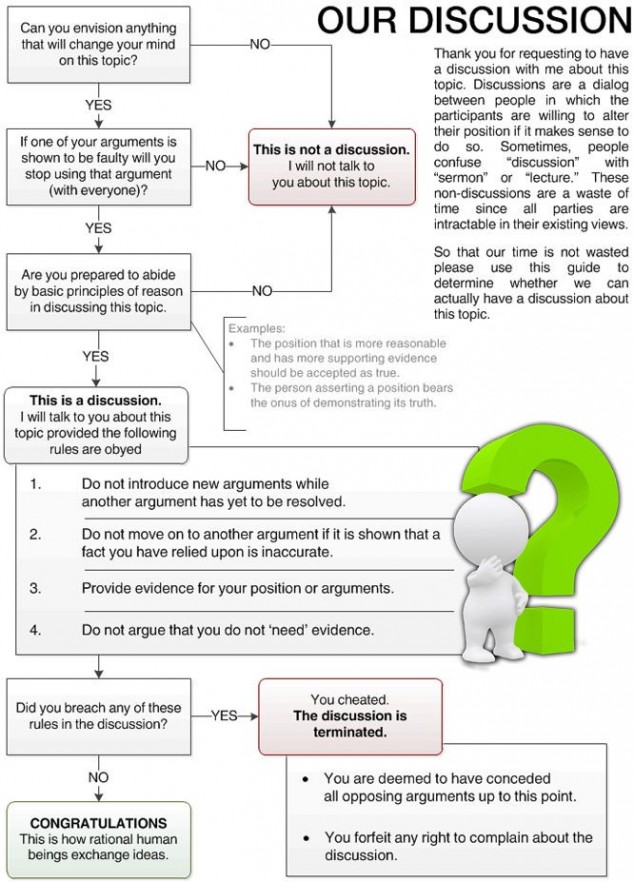
At the end of the day, game software is basically the same program with a bunch of hard-coded logic thrown into specific places. It's hard to really improve upon that anyway. Generally the game state is one big blob. Interactions happen in ways differently than business software. At least doing everything at once avoids the usual gotchas that people naturally attempt to do with gaming OOP: mario.draw() or mario.check_collision(block). That's probably worse than just hard-coding everything into the main file because you'll probably end up having to hack around your abuse of objects and inevitably it will lead to bugs. Of course, game software is typically not maintained. You write it once, ship it, and that's that. You'll never maintain it. You'll never go back to fix anything. Hell, if it shipped on a console you can't. At best you'll port it to other platforms and you'll do it as quick 'n dirty as you can. If this guy were to go back to this game in 6 months and try to figure out what was happening he might curse his past self. That said, it looks like the XNA or equivalent framework was used to make it and he probably has that structuring to thank for making it as straightforward as it is. He doesn't have any of the framework stuff that we'd have in Allegro to sort through. If he had to write that too he might not have ever made a game at all, let alone one that could reach Steam. That's the downfall of Allegro... He could probably reduce the size of the code quite a lot with a smarter design, but the size probably isn't a huge hindrance and it works so fuck it. -- acc.js | al4anim - Allegro 4 Animation library | Allegro 5 VS/NuGet Guide | Allegro.cc Mockup | Allegro.cc <code> Tag | Allegro 4 Timer Example (w/ Semaphores) | Allegro 5 "Winpkg" (MSVC readme) | Bambot | Blog | C++ STL Container Flowchart | Castopulence Software | Check Return Values | Derail? | Is This A Discussion? Flow Chart | Filesystem Hierarchy Standard | Clean Code Talks - Global State and Singletons | How To Use Header Files | GNU/Linux (Debian, Fedora, Gentoo) | rot (rot13, rot47, rotN) | Streaming |
|
jmasterx
Member #11,410
October 2009
|
bamccaig said:
Of course, game software is typically not maintained. You write it once, ship it, and that's that. You'll never maintain it. You'll never go back to fix anything. Hell, if it shipped on a console you can't. At best you'll port it to other platforms and you'll do it as quick 'n dirty as you can. That might have been true in say the 6th gen console days or earlier, but these days mandatory updates are the norm. They include new features, bug fixes, DLC, etc. So maintenance is now very much part of the game SDLC. Agui GUI API -> https://github.com/jmasterx/Agui |
|
RPG Hacker
Member #12,492
January 2011
|
Kinda, yeah. But typically only for a few weeks after release. Even then, this is only the case because, thanks to the power of patching, games are now released earlier than they used to (usually before they're fully ready and/or without having gone through the same kind of thorough QA that games on past consoles necessarily had to go through before release). I think what bamccaig meant was actually maintaining software for years to come. Like, for example, Windows. Microsoft doesn't release a version of Windows and then, a few weeks later, just abandons it and moves on to the next project, just to get back to the old Windows a few years later and do a quick and dirty port of it. No, after they release a new Windows version, they provide that version of Windows with updates for years to come, and even when a new Windows version is eventually made, it reuses a majority of the code of the old version. In that regard, I actually have to disagree with bamccaig a little. Sure, games are usually programmed for one-time use and are rarely touched upon after release. However, this doesn't go for game engines. Game engines are usually written for reuse, especially in professional environments, so even as a professional programmer, you want to put at least SOME care into maintaining your code. This doesn't necessarily apply to hobby programmers, of course.
|
|
Chris Katko
Member #1,881
January 2002
|
I heard John Carmack talking about advanced, expensive code quality analysis companies / services (5 figure expensive!). They told him his Doom 3 engine (601K lines of code) was one of the most well-put-together codebases they had ever seen. Other people apparently agree: http://kotaku.com/5975610/the-exceptional-beauty-of-doom-3s-source-code Now that doesn't really mean $$$, or good reviews. But it's still impressive from an artisan standpoint. Doom 3 was produced on a schedule, and was a commercial endeavor. One note though, I disagree about the articles "code shouldn't have comments." That's silly. Code for "how," comments for "why." [edit] Check out the comments! John Carmack himself chimes in! Quote: Thanks! A few comments: In some ways, I still think the Quake 3 code is cleaner, as a final evolution of my C style, rather than the first iteration of my C++ style, but it may be more of a factor of the smaller total line count, or the fact that I haven’t really looked at it in a decade. I do think “good C++” is better than “good C” from a readability standpoint, all other things being equal. I sort of meandered into C++ with Doom 3 – I was an experienced C programmer with OOP background from NeXT’s Objective-C, so I just started writing C++ without any proper study of usage and idiom. In retrospect, I very much wish I had read Effective C++ and some other material. A couple of the other programmers had prior C++ experience, but they mostly followed the stylistic choices I set. I mistrusted templates for many years, and still use them with restraint, but I eventually decided I liked strong typing more than I disliked weird code in headers. The debate on STL is still ongoing here at Id, and gets a little spirited. Back when Doom 3 was started, using STL was almost certainly not a good call, but reasonable arguments can be made for it today, even in games. I am a full const nazi nowadays, and I chide any programmer that doesn’t const every variable and parameter that can be. The major evolution that is still going on for me is towards a more functional programming style, which involves unlearning a lot of old habits, and backing away from some OOP directions. http://www.altdevblogaday.com/2012/04/26/functional-programming-in-c/ [edit] Archived version: John Carmack
-----sig: |
|
bamccaig
Member #7,536
July 2006
|
jmasterx said: That might have been true in say the 6th gen console days or earlier, but these days mandatory updates are the norm. They include new features, bug fixes, DLC, etc. So maintenance is now very much part of the game SDLC. The only updates that they'll push are generally going to be abuses of the platform. Probably severe bugs that prevent the game from being played if you're lucky, but I recall PS3 games that were never patched and you just had to pray as you went through certain levels that you didn't get stuck. Some games they might try to fix if they released before it was really ready to meet a deadline, but it'll just be the end of the development cycle overlapping with release/deployment. It's not maintenance mode. It's still development mode. Most updates are probably superficial, like removing controversial content, adding or tweaking tracking/DRM/intrusions, advertising, etc. Updates are usually pretty rare after the first few months of release even on platforms where it's technically possible. Unless it is hurting sales there's no point for the game studio to spend any extra resources on making changes. They move on. The exception is long-term online games, like GTA: Online or MMOs or whatever else. Those will get content updates to keep them relevant. -- acc.js | al4anim - Allegro 4 Animation library | Allegro 5 VS/NuGet Guide | Allegro.cc Mockup | Allegro.cc <code> Tag | Allegro 4 Timer Example (w/ Semaphores) | Allegro 5 "Winpkg" (MSVC readme) | Bambot | Blog | C++ STL Container Flowchart | Castopulence Software | Check Return Values | Derail? | Is This A Discussion? Flow Chart | Filesystem Hierarchy Standard | Clean Code Talks - Global State and Singletons | How To Use Header Files | GNU/Linux (Debian, Fedora, Gentoo) | rot (rot13, rot47, rotN) | Streaming |
|
Ariesnl
Member #2,902
November 2002
 |
Apparently C# eats your brain :-D Perhaps one day we will find that the human factor is more complicated than space and time (Jean luc Picard) |
|
Kris Asick
Member #1,424
July 2001
|
Ariesnl said: Apparently C# eats your brain :-D
While D just makes your ears bleed. --- Kris Asick (Gemini) |
|
amarillion
Member #940
January 2001
 |
Mark Oates said: I think I'm less productive when I try to write perfect software. That should be the TINS tagline -- |
|
l j
Member #10,584
January 2009
|
Perfectionism is a curse. I've never been proud of anything I've made so far and always rewrite over and over again. I've stopped the rewriting games part generally now, because I ended up writing a script language, scrapped it and am now busy building a compiler for a language that I'll probably end up throwing away at some point.
|
|
RPG Hacker
Member #12,492
January 2011
|
Quote: I am a full const nazi nowadays, and I chide any programmer that doesn’t const every variable and parameter that can be. He got me there! I usually DO use const with functions whereever it's necessary (either on pointer/reference arguments or on the functions themselves), except for things I pass by value (like native types or small structs), because I don't feel the need there. For actual code, I almost never use const, though, unless I absolutely have to (like when you pull an element from a vector of const objects, for example). I don't know if compilers even benefit from local variables being const (and I'm not talking about something like "const int = 1;" here, where I do see the point, but rather about something like "const int = arg + 1;", where arg is an argument and the whole expression therefore can't be a compile-time constant, anyways - I don't know if the const actually makes any difference here except for giving the programmer a usage hint).
|
|
l j
Member #10,584
January 2009
|
Const is 'pure', immutable values are easy to reason about. The majority of variables don't need to mutate in most programs. Optimizers are more free to make assumptions about immutable values. Accidentally mutating a const will result in a compile-time error.
|
|
Bruce Perry
Member #270
April 2000
|
Look on the bright side: the poor guy has now trained himself never to suffer a copy and paste error in his entire life I actually remember balking at what I would have to do to achieve certain things when I didn't know arrays yet. I think it may have been pixels or something. All 640x256 of them. -- |
|
bamccaig
Member #7,536
July 2006
|
Bruce Perry said:
Look on the bright side: the poor guy has now trained himself never to suffer a copy and paste error in his entire life How so? Quite the opposite, he has trained himself to suffer countless copy and paste errors. He needs to start on the path to untraining it. -- acc.js | al4anim - Allegro 4 Animation library | Allegro 5 VS/NuGet Guide | Allegro.cc Mockup | Allegro.cc <code> Tag | Allegro 4 Timer Example (w/ Semaphores) | Allegro 5 "Winpkg" (MSVC readme) | Bambot | Blog | C++ STL Container Flowchart | Castopulence Software | Check Return Values | Derail? | Is This A Discussion? Flow Chart | Filesystem Hierarchy Standard | Clean Code Talks - Global State and Singletons | How To Use Header Files | GNU/Linux (Debian, Fedora, Gentoo) | rot (rot13, rot47, rotN) | Streaming |
|
Johan Halmén
Member #1,550
September 2001
|
Allegro code is to top selling game code what poetry is to pop song lyrics. ~~~~~~~~~~~~~~~~~~~~~~~~~~~~~~~~~~~~~~~~~~~~~~~~~~ Years of thorough research have revealed that what people find beautiful about the Mandelbrot set is not the set itself, but all the rest. |
|
RPG Hacker
Member #12,492
January 2011
|
All this talk about copy & paste kinda reminds me of Limbo of the Lost!
|
|
Mark Oates
Member #1,146
March 2001
|
Johan Halmén said: poetry is to pop song lyrics. Pop music having a much higher market value. -- |
|
Bruce Perry
Member #270
April 2000
|
bamccaig said: How so? Quite the opposite, he has trained himself to suffer countless copy and paste errors. He needs to start on the path to untraining it.
I understand a copy and paste error to be where you legitimately copy and paste something but forget to change everything you wanted to change. Since he has done so much copying and pasting, he will be an expert and not forgetting to change things. You're right that he needs to train himself not to copy and paste so much, of course - but once he's done that, at least he'll still copy and paste reliably when he does need to -- |
|
|
1
2
|


 )
)