|
|
|
| What. The. Hell. |
|
raynebc
Member #11,908
May 2010
|
The tunnel openings are closer to the wall and not deep into the parts of Israel that civilians are inhabiting. Israel keeps its civilians away from the front lines, and I have read articles documenting that IDF has had casualties from Hamas insurgents that infiltrated Israel using a tunnel, often those insurgents are dressed as Israeli military. |
|
type568
Member #8,381
March 2007
 |
If it's not deep in to the territory standing guard behind the wall may prove good enough. Going in is dangerous for the soldiers. And well, Palestinian(especially civilian) deaths spawn more terrorists as we agreed. Append: *- does my latest sentence contain a grammar error? I'd like to know.
|
|
Slartibartfast
Member #8,789
June 2007
 |
type568 said: I may have skipped something, but there was so far one Israeli civillian dead in the offensive. & it was to a rocket. Tunnels? 3 dead Israeli citizens, 2 from mortars and 1 from a rocket. As for tunnels, I know of at least one infiltration attempt that was prevented, had Israeli soldiers not been around, the inhabitants of at least one settlement could have been massacred. Whether this means that having guards is enough, I don't know. Either way there are still the smuggling tunnels, where a guard would not be enough. But as for how it is best to handle those tunnels - I don't know what the best way is, but what actually happened is that the IDF went in and destroyed those tunnels (those it had known of from before and those it found after entering), so hopefully that's dealt with for a while. type568 said: That sounds like you at least understand my point. I'm glad with that, those live in Israel often have a problem with that. A really close friend of mine is included. I understand what you are getting at, I just don't think it will play out like you think. Also, hooray for a ceasefire, hopefully it will last indefinitely. ---- |
|
Neil Roy
Member #2,229
April 2002
 |
Ah well, don't want Israel bombing you, how about kicking the fucking Hamas out?! Otherwise, tough fucking shit. --- |
|
raynebc
Member #11,908
May 2010
|
type568 said: If it's not deep in to the territory standing guard behind the wall may prove good enough. I rather doubt that's good enough. Some/most/all of the tunnels found were paved and large enough to drive motorcycles through, in fact some tunnels were found to be storing motorcycles. IDF is patrolling for tunnel attacks now, but it wouldn't take long for Hamas to swarm in on bikes. The best defense was to destroy the tunnel network, which was IDF's goal. type568 said: does my latest sentence contain a grammar error? I would suggest this instead: Nevertheless, I don't see why this judgment is wrong. |
|
type568
Member #8,381
March 2007
|
Slartibartfast said: I just don't think it will play out like you think. Yeah, I understood it the first time you said it, good enough. It's not unthinkable for you at least. raynebc said: I would suggest this instead: Nevertheless, I don't see why this judgment is wrong.
Americans -.-
|
|
raynebc
Member #11,908
May 2010
|
You asked if it was grammatically correct and I gave you my opinion. I'm not an English major, but the way you had typed it doesn't sound quite right to a native English speaker (proper order of subject, verb, etc.). |
|
Johan Halmén
Member #1,550
September 2001
|
The problem with something, that's written wrong, is that it might be ambiguous. It might be corrected in different ways. "Nevertheless, I don't see why is this judgement wrong." That's badly written. When the reader tries to fix that, he might try punctuation: ...or he might try word order: ~~~~~~~~~~~~~~~~~~~~~~~~~~~~~~~~~~~~~~~~~~~~~~~~~~ Years of thorough research have revealed that what people find beautiful about the Mandelbrot set is not the set itself, but all the rest. |
|
type568
Member #8,381
March 2007
|
So it is written wrong? (I understand it doesn't feel native, my question was whether it's correct). In Russia you can usually say something in a less native way that's still correct and doesn't have more than one meaning,there's a lot of freedom in words placement. So, does this: contain an error? And this: Johan Halmén said: "Nevertheless, I don't see why. Is this judgement wrong?" ...or he might try word order: Well, these sound quite similar.. And their meaning is close to say the least.
|
|
raynebc
Member #11,908
May 2010
|
I'd say yes, it is technically wrong. It's basically combining the syntax of a statement and a question. Like Johan suggested, "Why is this judgment wrong?" and "I don't see why this judgment is wrong" have different meanings and the original sentence is ambiguous. Native speakers will understand the general idea of what you're saying, but it's not obvious whether you're asking a question or not. |
|
Thomas Fjellstrom
Member #476
June 2000
 |
Word/statement order is rather important in English. At the very least it changes the emphasis, and at worst, it can render the sentence unintelligible. -- |
|
type568
Member #8,381
March 2007
|
@ranye aha.. Right, I see. @Thomas.. Yeah it is. In Russia you have a LOT, LOT forms of words, which let the order be less of a matter in certain cases, I guess that's the reason. So, this: Nevertheless, I don't see why is this judgement wrong.* IS without errors, correct?
|
|
bamccaig
Member #7,536
July 2006
 |
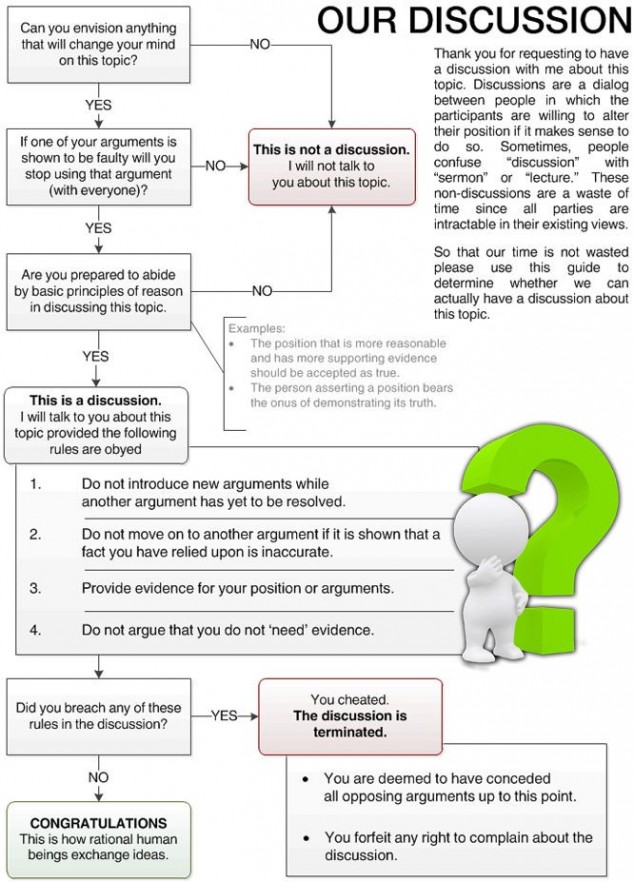
Actually English can be entirely ambiguous while still being correct. It isn't the ambiguity that makes it wrong. It's the grammar AKA syntax. We may be able to understand what it means with context, but we're still just making a best attempt at it. A strictly logical machine could not come to a certain conclusion. Append: type568 said: Nevertheless, I don't see why this judgement is wrong.* FTFY. -- acc.js | al4anim - Allegro 4 Animation library | Allegro 5 VS/NuGet Guide | Allegro.cc Mockup | Allegro.cc <code> Tag | Allegro 4 Timer Example (w/ Semaphores) | Allegro 5 "Winpkg" (MSVC readme) | Bambot | Blog | C++ STL Container Flowchart | Castopulence Software | Check Return Values | Derail? | Is This A Discussion? Flow Chart | Filesystem Hierarchy Standard | Clean Code Talks - Global State and Singletons | How To Use Header Files | GNU/Linux (Debian, Fedora, Gentoo) | rot (rot13, rot47, rotN) | Streaming |
|
Thomas Fjellstrom
Member #476
June 2000
|
type568 said: So, this: Nevertheless, I don't see why is this judgement wrong.* IS without errors, correct? I'm not sure what that is supposed to be saying to be honest. To me at least (and probably many other native english speakers), there's some missing punctuation there, or a word is out of place. My brain wants to correct it to: Nevertheless, I don't see why this judgement is wrong. If you say "Why is this" you're structuring the sentance as a question, but there's no question mark, and it seems like there wants to be some form of punctuation between the "I don't see" (or "I don't see why") and the rest. As it is, it's awkward sounding, and It's not clear what you mean. References
-- |
|
Matthew Leverton
Supreme Loser
January 1999
 |
Here in 'Muricah, judgment is spelled without an e. But regarding the grammar, subject-auxiliary inversion is just how it is. http://en.wikipedia.org/wiki/Subject%E2%80%93auxiliary_inversion |
|
altalena
Member #13,639
October 2011
 |
If Jews lost the right to live in the Land of Israel, then every military action they carry out is illegitimate, otherwise there exists a right to self-defense. Does anyone know at what point in the following timeline the Jewish faith/nation lost the right to live in Israel? Keep in mind that for every person who is on Wikipedia, there are several thousand who are not. wikipedia link Gamliel II - Nasi c. 80- wikipedia link Shimon bar Kokhba - Nasi 132-135 wikipedia link Shimon ben Gamliel II - Rosh Yeshiva wikipedia link second century wikipedia link Gamaliel IV - President of Beit HaMidrash 270-290 wikipedia link Judah III - Nasi of Sanhedrin 290-320 wikipedia link Hillel II - Nasi of Sanhedrin c. 320-385 wikipedia link Gamliel V - Nasi of Sanhedrin c. 365-385 wikipedia link Judah IV - Nasi of Sanhedrin 385-400 wikipedia link Gamliel VI - Nasi of Sanhedrin 370-425 wikipedia link Mar-Zutra III - Aliyah 520 later Rosh Yeshivah of Tiverias wikipedia link Binyamin of Tiverias - financed revolt against Heraclius 7th Century wikipedia link Achai of Sabha - 8th-century Talmudist wikipedia link Aharon ben Meïr - Nasi of Palestinian Gaonate in the early 10th century wikipedia link Sa'adiah ben Yosef Al-Fayyumi - studied in Tiverias at young age, published Hebrew Dictionary at age 20 - lived from 882 or 892 until 940 wikipedia link Yefet ben Ali - Karaite commentator, lived in Jerusalem 950-980 wikipedia link Daniel ben Azariah - gaon of Eretz Yisrael 1051-1062 wikipedia link Shimshon ben Avraham of Sens - Tosafist - lived in Palestine c. 1211 - 1230 wikipedia link Yechiel of Paris - Tosafist, Founder of Midrash haGadol d'Paris in Acre - lived in Palestine from between 1258 to between 1265 and 1268 (disputed) wikipedia link Ishtori Ha-Parhi - settled in Palestine after being victim of ethnic cleansing in 1306, physician in Bet She'an until 1355 wikipedia link Yitzakh ben Shmuel of Akko - Palestinian astrophysicist, born in Palestine 13th Century, fled Mamluk massacre c. 1305 to Spain wikipedia link Ovadiah ben Avraham - March 25 1488 moved to Jerusalem, died c. 1515 in Jerusalem - commentator on Mishna wikipedia link Yosef Saragossi - left Spain after expulsion 1492 for Tsfat, Mekubal well respected by Arab community, died 1507 in Palestine wikipedia link Moshe Alshich - wikipedia link Acharon born in Ottoman Empire 1508, died 1593 in Tsfat wikipedia link Elazar ben Moshe Azikri - born in Tsfat 1533, Songwriter, died 1600 wikipedia link Sabbatean prophet for failed messiah - born Jerusalem 1643 wikipedia link Perushim - disciples of the Gaon of Vilna who resettled in Israel 1808 - 1809 wikipedia link Makhlouf Eldaoudi - Hakham Bashi (Chief Rabbi) for Acre, Haifa, Tsfat, and Tiverias 1889-1909, born 1825 in Marrakesh wikipedia link Jacob Meir - Sephardic Chief Rabbi of Mandate of Palestine, born 1856 died 1939 in Mandate of Palestine edited so links work - i hope ...At the briefest instant following creation all the matter of the universe was concentrated in a very small place, no larger than a grain of mustard. The matter at this time was very thin, so intangible, that it did not have real substance. It did have, however, a potential to gain substance and form and to become tangible matter. From the initial concentration of this intangible substance in its minute location, the substance expanded, expanding the universe as it did so. As the expansion progressed, a change in the substance occurred. This initially thin noncorporeal substance took on the tangible aspects of matter as we know it. From this initial act of creation, from this ethereally thin pseudosubstance, everything that has existed, or will ever exist, was, is, and will be formed. - the RaMBaN, 1194 - 1270 ג וּשְׁאַבְתֶּם-מַיִם, בְּשָׂשׂוֹן, מִמַּעַיְנֵי, הַיְשׁוּעָה. - Yeshayahu 12:3 |
|
Yodhe23
Member #8,726
June 2007
|
Probably around 390CE with the split of the Roman Empire, and Palestine Prima became a Christian dominated province. No-one I know has denied the right of anyone to live in Palestine (Prima), but sombunal people seem to think that only certain people have the right to live in Israel. The historical revisionism that goes on by Zionist apologists is up there with anything Orwell invented. www.justanotherturn.com |
|
altalena
Member #13,639
October 2011
|
So a Jewish minority being occupied by Romans and Byzantines loses the right to live where they live? Did the Christian and Jewish Palestinians being occupied by Arabs in 636 lose their right to live where they lived? Did Jews and Muslim and Christian Arabs lose the right to live where they lived when the Histadrut declared independence in 1948? For how many of those 1500 years was there a sovereign Palestinian state? Ariel Sharon seemed to think that ethnically cleansing Gaza in 2005 was a good idea, and Israeli and Anglo-American ruling elites seemed to agree with him. Personally, I don't care if there are Christians, Muslims, or Pastafarians living in Israel. It's the pressure from the world's elites to demolish Jewish homes, give resources to the Palestinian Authority and the Israeli government, and release people who specifically target children for killing that bothers me. ...At the briefest instant following creation all the matter of the universe was concentrated in a very small place, no larger than a grain of mustard. The matter at this time was very thin, so intangible, that it did not have real substance. It did have, however, a potential to gain substance and form and to become tangible matter. From the initial concentration of this intangible substance in its minute location, the substance expanded, expanding the universe as it did so. As the expansion progressed, a change in the substance occurred. This initially thin noncorporeal substance took on the tangible aspects of matter as we know it. From this initial act of creation, from this ethereally thin pseudosubstance, everything that has existed, or will ever exist, was, is, and will be formed. - the RaMBaN, 1194 - 1270 ג וּשְׁאַבְתֶּם-מַיִם, בְּשָׂשׂוֹן, מִמַּעַיְנֵי, הַיְשׁוּעָה. - Yeshayahu 12:3 |
|
Slartibartfast
Member #8,789
June 2007
|
Quote: judgement When I see a Hebrew speaker use the word "judgement", I just automatically assume he meant "sentence" and can then only see the sentence as horribly broken. ---- |
|
LennyLen
Member #5,313
December 2004
 |
The concept of a right to do anything is vague at best. Rights are granted solely by who holds power at any time. There is no innate human right to anything.
|
|
Arthur Kalliokoski
Second in Command
February 2005
 |
Slartibartfast said: When I see a Hebrew speaker use the word "judgement", I just automatically assume he meant "sentence" and can then only see the sentence as horribly broken. Getting good balance in a game takes judgement. They all watch too much MSNBC... they get ideas. |
|
altalena
Member #13,639
October 2011
|
If rights are determined by who holds power then Jews got the right to move to Israel in 1917 and lost it in the 1930s. The British empire had no right If rights are determined by power, then non-Jewish Palestinians had no national rights for most of their history, being always part of a larger empire such as the Ottomans, the Seljuk Turks, the Egyptian Mamluks, the Caliphates etc. ...At the briefest instant following creation all the matter of the universe was concentrated in a very small place, no larger than a grain of mustard. The matter at this time was very thin, so intangible, that it did not have real substance. It did have, however, a potential to gain substance and form and to become tangible matter. From the initial concentration of this intangible substance in its minute location, the substance expanded, expanding the universe as it did so. As the expansion progressed, a change in the substance occurred. This initially thin noncorporeal substance took on the tangible aspects of matter as we know it. From this initial act of creation, from this ethereally thin pseudosubstance, everything that has existed, or will ever exist, was, is, and will be formed. - the RaMBaN, 1194 - 1270 ג וּשְׁאַבְתֶּם-מַיִם, בְּשָׂשׂוֹן, מִמַּעַיְנֵי, הַיְשׁוּעָה. - Yeshayahu 12:3 |
|
Yodhe23
Member #8,726
June 2007
|
Altalena, of course not, but then the indigenous population shouldn't lose their right to live where they live(d). Also just because a few people of a certain faith lived there, doesn't give anyone else a claim to live there. Property rights, citizenship and other recognized international claims do however, claims and right that the Zionists are only too happy to ignore for others, and then seemingly complaining about their own being sacrosanct. www.justanotherturn.com |
|
Johan Halmén
Member #1,550
September 2001
|
altalena said: Does anyone know at what point in the following timeline the Jewish faith/nation lost the right to live in Israel? If rights are determined by who holds power then Jews got the right to move to Israel in 1917 and lost it in the 1930s. One thing man can learn from history is that man can't learn anything from history. This should be transfered somehow to speaking about rights to live somewhere. And rights of "a nation" or "a people". As I wrote earlier, Finland lost territories to Russia. Before that, Sweden-Finland lost its Eastern part to Russia. Before that, Russia lost parts to Sweden. Before that yadda yadda... If you are referring to historical things and hope to "put things straight", you have to teach your children to hate! There. I said it again. ~~~~~~~~~~~~~~~~~~~~~~~~~~~~~~~~~~~~~~~~~~~~~~~~~~ Years of thorough research have revealed that what people find beautiful about the Mandelbrot set is not the set itself, but all the rest. |
|
Polybios
Member #12,293
October 2010
|
type568 said: In Russian (...) there's a lot of freedom in words placement.
type568 said: Nevertheless, I don't see why is this judgement wrong.
English is a rather analytic language, that means it has less possible morphemes per word or minimal inflection. For example, there are no case endings for nouns. Contrary to Russian, as far as I know. The word order in declarative sentences / statements is generally SV(O) or SP(O) meaning subject - verb (- object) or subject - predicate (- object). IMHO your example contains an indirect question, which is a question semantically, but a statement syntactically, so you don't do any inversion, i. e. you have to use svo. |
|
|
|


 to issue the Balfour declaration in 1917, it wasn't their country.