|
|
|
| C++0x, progress or pointless |
|
anonymous
Member #8025
November 2006
|
The Wikipedia article quotes this usage: template< typename LHS, typename RHS> auto AddingFunc(const LHS &lhs, const RHS &rhs) -> decltype(lhs+rhs) {return lhs + rhs;} Apparently you'll only need it when the return type would depend on the types of the arguments. |
|
Trezker
Member #1,739
December 2001
 |
Ok then. I think we've exhausted the {} debate for now. I'm not gonna do the discussing though, I just think it's getting boring to follow the thread when you just argue over a single feature. |
|
BAF
Member #2,981
December 2002
 |
Can't you do that already with templates without that syntax though? |
|
bamccaig
Member #7,536
July 2006
 |
anonymous said: Apparently you'll only need it when the return type would depend on the types of the arguments. It makes sense, although that's probably the only time it should be used (and anybody that tries to use it unnecessarily should be shot). Trezker said: Ok then. I think we've exhausted the {} debate for now. I'm not gonna do the discussing though, I just think it's getting boring to follow the thread when you just argue over a single feature.
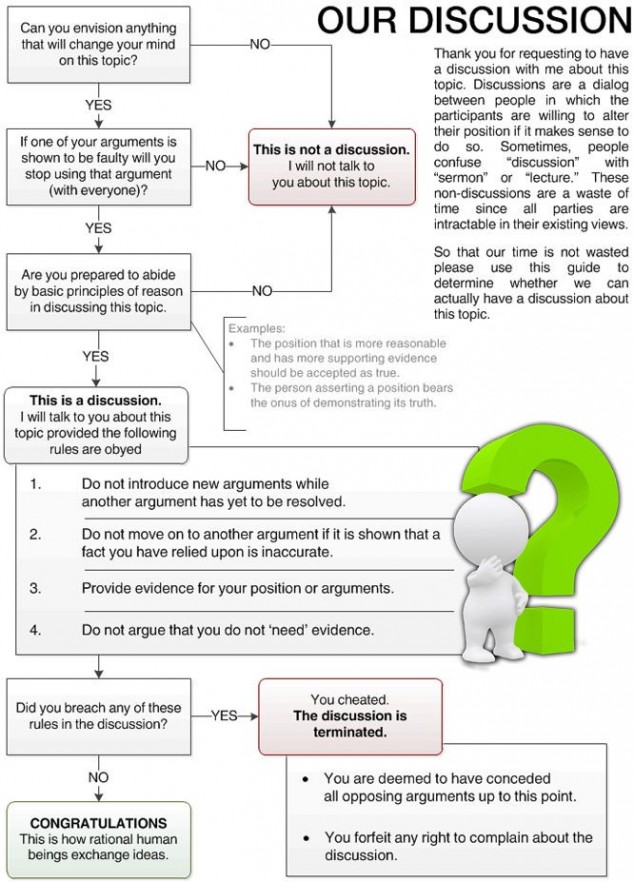
They were actually just arguing about a different feature. BAF said: Can't you do that already with templates without that syntax though? If you don't know what the types are then how can you know what adding them together will give you? I think that's why this exists. So the compiler knows the return type is the result of adding these types together. -- acc.js | al4anim - Allegro 4 Animation library | Allegro 5 VS/NuGet Guide | Allegro.cc Mockup | Allegro.cc <code> Tag | Allegro 4 Timer Example (w/ Semaphores) | Allegro 5 "Winpkg" (MSVC readme) | Bambot | Blog | C++ STL Container Flowchart | Castopulence Software | Check Return Values | Derail? | Is This A Discussion? Flow Chart | Filesystem Hierarchy Standard | Clean Code Talks - Global State and Singletons | How To Use Header Files | GNU/Linux (Debian, Fedora, Gentoo) | rot (rot13, rot47, rotN) | Streaming |
|
BAF
Member #2,981
December 2002
|
It seems like quite a stretch to me. |
|
bamccaig
Member #7,536
July 2006
|
It seems evil, but a necessary evil. -- acc.js | al4anim - Allegro 4 Animation library | Allegro 5 VS/NuGet Guide | Allegro.cc Mockup | Allegro.cc <code> Tag | Allegro 4 Timer Example (w/ Semaphores) | Allegro 5 "Winpkg" (MSVC readme) | Bambot | Blog | C++ STL Container Flowchart | Castopulence Software | Check Return Values | Derail? | Is This A Discussion? Flow Chart | Filesystem Hierarchy Standard | Clean Code Talks - Global State and Singletons | How To Use Header Files | GNU/Linux (Debian, Fedora, Gentoo) | rot (rot13, rot47, rotN) | Streaming |
|
BAF
Member #2,981
December 2002
|
Please give a useful example of how it is useful then. The example anonymous gave is quite a stretch, how often does your return value depend on mroe than one template parameter? |
|
bamccaig
Member #7,536
July 2006
|
BAF said: Please give a useful example of how it is useful then. The example anonymous gave is quite a stretch, how often does your return value depend on mroe than one template parameter? In C#/.NET, when you use the + or - operator with two System.DateTimes, the result is a System.TimeSpan. -- acc.js | al4anim - Allegro 4 Animation library | Allegro 5 VS/NuGet Guide | Allegro.cc Mockup | Allegro.cc <code> Tag | Allegro 4 Timer Example (w/ Semaphores) | Allegro 5 "Winpkg" (MSVC readme) | Bambot | Blog | C++ STL Container Flowchart | Castopulence Software | Check Return Values | Derail? | Is This A Discussion? Flow Chart | Filesystem Hierarchy Standard | Clean Code Talks - Global State and Singletons | How To Use Header Files | GNU/Linux (Debian, Fedora, Gentoo) | rot (rot13, rot47, rotN) | Streaming |
|
Arthur Kalliokoski
Second in Command
February 2005
 |
anonymous said: there is no extra overhead if they don't want to have their POD initialized at this point. What's POD? The closest definitions I could find were Portable On Demand and Prince Of Darkness. They all watch too much MSNBC... they get ideas. |
|
bamccaig
Member #7,536
July 2006
|
Arthur Kalliokoski said: What's POD? The closest definitions I could find were Portable On Demand and Prince Of Darkness. -- acc.js | al4anim - Allegro 4 Animation library | Allegro 5 VS/NuGet Guide | Allegro.cc Mockup | Allegro.cc <code> Tag | Allegro 4 Timer Example (w/ Semaphores) | Allegro 5 "Winpkg" (MSVC readme) | Bambot | Blog | C++ STL Container Flowchart | Castopulence Software | Check Return Values | Derail? | Is This A Discussion? Flow Chart | Filesystem Hierarchy Standard | Clean Code Talks - Global State and Singletons | How To Use Header Files | GNU/Linux (Debian, Fedora, Gentoo) | rot (rot13, rot47, rotN) | Streaming |
|
Arthur Kalliokoski
Second in Command
February 2005
|
Plain Old Data Structures? That's PODS. They all watch too much MSNBC... they get ideas. |
|
SiegeLord
Member #7,827
October 2006
 |
If you don't use C/C++, you shouldn't be posting in this thread, because, clearly, you don't need the special features those two languages provide. That article is yet another FQA-like bit of nonsense... except it's about C++0x. Yes, it's not perfect, but what other choice is there when you want to do numerical programming? "For in much wisdom is much grief: and he that increases knowledge increases sorrow."-Ecclesiastes 1:18 |
|
Timorg
Member #2,028
March 2002
|
Any of these would also do the job I am sure, But Fortran 2003 comes to mind. ____________________________________________________________________________________________ |
|
SiegeLord
Member #7,827
October 2006
|
Yeah, FORTRAN is the only serious alternative to my knowledge, but I would scarcely say that it is all that much more user friendly than the C/C++ duo. "For in much wisdom is much grief: and he that increases knowledge increases sorrow."-Ecclesiastes 1:18 |
|
Arthur Kalliokoski
Second in Command
February 2005
|
C/C++/C++0x aren't in that list at all. They all watch too much MSNBC... they get ideas. |
|
BAF
Member #2,981
December 2002
|
bamccaig said: In C#/.NET, when you use the + or - operator with two System.DateTimes, the result is a System.TimeSpan. That's not a good example. I mean a useful example where you would even want to do something like the original snippet. |
|
anonymous
Member #8025
November 2006
|
I remember a thread in Gamedev where someone wanted to make Vector<int> + Vector<double> return Vector<double> (or generally Vector<the_type_that_the_result_is_promoted_to>). It can be simulated (at least to some extent) with some metaprogramming, but C++0x would allow this quite simply. It is probably not a very practical example, just something that a zealous library-writer thought would be cool. Another thing is that perhaps it can provide a small shortcut to things that are tedious to type: template <class T> typename std::vector<T>::const_iterator foo(const std::vector<T>& vec); template <class T> auto foo(const std::vector<T>& vec) -> decltype(vec.end());
Ok, not that much shorter, and probably not entirely clear It is quite likely that its main usefulness would be in template metaprogramming or with some new features like variadic templates. In practice it's happening every time you add values of different type: they are promoted to something but you'll just assign (cast) them to some type to store the result. ----- If I'm not mistaken, all the features don't come from some committee. Real programmers like you and me can (could) make suggestions, and then the committee would discuss which are actually good ideas, which are feasible to implement, which would break existing code etc. |
|
Martin Kalbfuß
Member #9,131
October 2007
 |
Quote: But in C++0x you can write auto someFunc() -> int { // function body...
It would be nice without the auto keyword. It looks more like a return value. http://remote-lisp.spdns.de -- my server side lisp interpreter |
|
Tobias Dammers
Member #2,604
August 2002
 |
anonymous said: I remember a thread in Gamedev where someone wanted to make Vector<int> + Vector<double> return Vector<double>
Someone who wants to do this should re-think their coding habits. Facilitating something like this isn't cool, it leads to the kind of unmaintainable convoluted code the C folks are so proud of, or the kind of template abuse some C++ programmers seem to love so much. --- |
|
Kibiz0r
Member #6,203
September 2005
 |
Neil Walker said: If everyone is dead set against c/c++, why are we all (THarte Excepted) writing our allegro games in c/c++
Neil Walker said: If it weren't for allegro I wouldn't be using it at all Allegro# 2.0 this summer. (Well, 1.9 until A5 officially comes out.) Also, I'm not digging C++0x. --- |
|
anonymous
Member #8025
November 2006
|
Tobias Dammers said: Someone who wants to do this should re-think their coding habits. The question was about the geometrical vector, not the container. I understand that it was an entirely theoretical discussion, since in practice it probably won't be that necessary, but C++0x would allow one to implement it like this: template <class T, class U> auto operator+(const Vector<T>& a, const Vector<U>& a) -> Vector<decltype(a.x + b.x)> { return {a.x + b.x, a.y + b.y}; //another advantage of new constructor syntax? } Right now what you could do is: //lots of metaprogramming here template <class T, class U> Vector<promote<T, U>::type > operator+(const Vector<T>& a, const Vector<T>& b) { return Vector<promote<T, U>::type >(a.x + b.x, a.y + b.y); } Or perhaps support just a few vector types (who needs many different types anyway) and define the int + int -> int and double + double -> double versions (if the implicit conversions work, if not also int + double -> double and double + int -> double). |
|
Tobias Dammers
Member #2,604
August 2002
|
I'd go for overloading just operator +=. This way, the return type is obvious, and it's up to the user to decide which return type they want: template <class T> class Vector<T> { //... template <class U> Vector<T> operator+=(const Vector<U> rhs) { x += rhs.x; y += rhs.y; return *this; } } Or ditch the overloading for incompatible types and use a static method: template <class T> class Vector<T> { //... template <class U, class V> static Vector<T> add(const Vector<U> a, const Vector<V> b) { return Vector<T>((T)(a.x + b.x), (T)(a.y + b.y)); } } Or choose maintainability over cleverness and do everything with just Vector<double>, except at the very last stage, where you use Vector<int>. Then all you need is a templated copy constructor that can initialize a Vector<T> from a Vector<U>, and you're done. --- |
|
anonymous
Member #8025
November 2006
|
Tobias Dammers said: I'd go for overloading just operator +=.
But this is against convention. If the types support +=, they should also support equivalent + Quote: Or ditch the overloading for incompatible types and use a static method Except the calls would be rather awkward: c = Vector<double>::add(a, b); If one is writing a library to be used often, I'm all for the one-time investment to make things more pleasant for the end user. Quote: Or choose maintainability over cleverness I've never said that the whole thing is meant to be practical... but isn't it nice if you can do it simply? |
|
Tobias Dammers
Member #2,604
August 2002
|
I prefer languages that discourage impractical code. --- |
|
anonymous
Member #8025
November 2006
|
Todays C++ also discourages it. In practice it seems that it can simplify your prototypes (a bit like I showed above, but instead with a out-of-line member function definition involving nested types as the return value) and it may have something to do with SFINAE (well, not my line). I guess it is also a compromise with compiler implementators (if I'm not mistaken the standard committee is trying to avoid repeating the "export" mistake - a very useful feature which practically all compiler writers found too difficult to implement). |
|
|
|


 (This, I believe, would actually be simplified by template typedefs.)