|
|
|
| Sun revolves around Earth, say 56% |
|
StevenVI
Member #562
July 2000
 |
Quote: Why do people like to say that atheists have faith in something? How does it require faith to not have faith in something? From the American Heritage Dictionary: Quote:
faith (fāth)
</li> Again from the American Heritage Dictionary: Quote:
a·the·ism (ā'thē-ĭz'əm)
</li> As I had always understood it, and which the dictionary seems to back me up on, by saying that you are an atheist you are saying that you specifically believe there are no gods. How can you say that this is not a belief lacking evidence? Do you have evidence that there are no gods? __________________________________________________ |
|
23yrold3yrold
Member #1,134
March 2001
 |
Wow, too many friggin' posts. Quote: So, there is, to you, a real difference between the existence of something that has no interaction with anything at all and the same thing not existing? What does the distinction consist of? Isn't it self-explanitory? In any case, it is interacting in some way, because you keep saying things like not having a theoretical reference point that could exist outside the Big Bang. Why not? What's stopping you? Quote: Because light takes 13.7Gyr to cross those 13.7Gly. That's the very definition of what a lightyear means. And this is so because the speed of light is finite and the same for all observers. The part you italicize is the part that convinces me you're wrong. One of us must be missing something here. Quote: Because the universe expands. And the bits of universe forging the new ground is the light, I'd think. If the Big Bang was just "everywhere" and light that left it 13.7Gly ago can still reach us, we should be able to see the thing on any clear night I imagine. Quote: We already did. I'm not talking about COBE and that stuff. Evert said "Remember, looking to the distant universe means looking backwards in time since the speed of light is finite. If we could look back far enough, we could see the big bang itself (though highly redshifted)." I want to know by what logic this could possibly happen. -- |
|
Kibiz0r
Member #6,203
September 2005
 |
@Harry Carey: I certainly put trust in science, for experiments I haven't performed, results I haven't personally witnessed. In that sense, I have faith, in the people that performed the experiments and made the observations, and the people who checked their work and subjected it to critique. So I take it back. Yes, I do have faith. I'm not sure if that's the same sort of faith we're talking about with the supernatural, though. The faith I put into a hair product not burning off all my hair is evaluated immediately. Science thrives on experimentation, but religion you can only evaluate after you're dead, and therefore unable to share any result. It might be a little misleading to call that sort of evaluable faith, "faith". Even for one-shot stuff like experimental drugs, there is some data such as the fact that the drug companies don't make money off of killing their customers, doctors generally don't try to kill their patients, etc... Still, just like with the experimental drug, none of us patients were there when the drug was being created and tested, so we're more or less free to make our own decision. Myself, I'm not about to make any assertion on it, positive or negative, without evidence, so I'm sticking with the default position. The one leap of faith I make is accepting that what I witness (while in my right mind, at least) is reality, and that the other people I encounter share a similar experience. I must accept it, or else go insane and create my own reality. As for the definition of atheism, see http://atheism.about.com/od/atheismquestions/a/defining.htm Or: thejesusmyth.com said: Atheism: The non-belief or disbelief of any concept of divinity, god, or the supernatural.
infidels.org said: "What is atheism?" Atheism is characterized by an absence of belief in the existence of gods. This absence of belief generally comes about either through deliberate choice, or from an inherent inability to believe religious teachings which seem literally incredible. It is not a lack of belief born out of simple ignorance of religious teachings. Some atheists go beyond a mere absence of belief in gods: they actively believe that particular gods, or all gods, do not exist. Just lacking belief in Gods is often referred to as the "weak atheist" position; whereas believing that gods do not (or cannot) exist is known as "strong atheism."
atheistalliance.org said: An atheist is anyone who has no belief in any god, whether the god is called Jehovah, Satan, Vishnu, Allah, Loki, Zeus, or any other name. Therefore, atheists hold many varieties of social and political philosophies. There is no atheist dogma, and the Atheist Alliance International has no catechism. However, most of us are atheists because we are rationalists. That means we look for the best evidence in deciding what to believe. Of course, we don’t believe in such ideas as miracles, “intelligent” design, and “scientific” creationism. There are also popular notions which are secular and which a few vocal atheists may believe, but which have no supporting evidence. They are extremely unpopular among the great majority of atheists-rationalists. They include: 1. The appearance of “ghosts” or other spirits of the dead. An atheist can have belief (even a belief that there is no God/Gods), but it's not a prerequisite to join the club. I, personally, am what you'd call an agnostic atheist or a weak atheist. I don't believe in God, Invisible Pink Unicorns, Zeus, Thor, or the Flying Spaghetti Monster because I haven't seen any evidence. If I did, I'd accept it. ~~~ Edit: Hah, check out the first article in the Common Myths about Atheism and Atheists section... --- |
|
nonnus29
Member #2,606
August 2002
 |
You guys are STILL beating this dead horse? Quote: Mathematics is "just a theory", but who's going to argue that 2 + 2 != 4? Note he didn't specify Z3 so I'd assume N or Z. Regardless, I prefer Church Numerals.
http://www.cs.usm.maine.edu/class/cos370/handouts/lambda/node9.html |
|
Kibiz0r
Member #6,203
September 2005
|
Quote:
You guys are STILL beating this dead horse? Uh... welcome to a.cc? --- |
|
bamccaig
Member #7,536
July 2006
 |
Harry Carey said: You say this with such certainty. You have a lot of faith in your belief. Atheists don't have to have faith in science. Harry Carey said the definition for 'Faith' said: 2. Belief that does not rest on logical proof or material evidence.
Atheists don't need faith because their beliefs rest on logical proof or material evidence. Scientists need to explain themselves before their theories are accepted and the theories are only accepted so long as they make sense and work. Religion expects you to just believe because some people told you so... Evert said: Because the universe expands. Could somebody please explain to me where the notion that the universe is expanding came from? That doesn't make sense to me. The universe is everywhere so there's no need to expand. I also disagree with the ability to see the Big Bang that resulted in our current galaxy and others. Based on the fact that light travels way faster than anything else in the universe it would undoubtedly have passed our galaxy long ago. 23yrold3yrold said: Wow, too many friggin' posts.
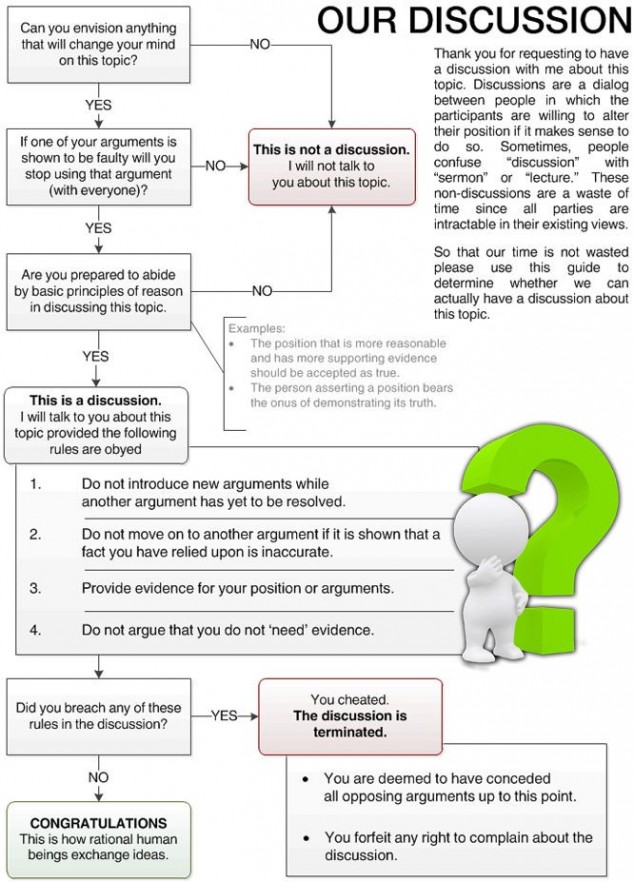
Agreed. Every time I check back again there's WAY too much to read, let alone respond to... -- acc.js | al4anim - Allegro 4 Animation library | Allegro 5 VS/NuGet Guide | Allegro.cc Mockup | Allegro.cc <code> Tag | Allegro 4 Timer Example (w/ Semaphores) | Allegro 5 "Winpkg" (MSVC readme) | Bambot | Blog | C++ STL Container Flowchart | Castopulence Software | Check Return Values | Derail? | Is This A Discussion? Flow Chart | Filesystem Hierarchy Standard | Clean Code Talks - Global State and Singletons | How To Use Header Files | GNU/Linux (Debian, Fedora, Gentoo) | rot (rot13, rot47, rotN) | Streaming |
|
Karadoc ~~
Member #2,749
September 2002
 |
Quote: Not quite. There is a magnetic field around Earth which has poles and makes the compass work (but not at geographical poles), and while you could draw the grid of longitudes and latitudes arbitrarily, it makes a lot of sense to have the sun's height at midday of a given day be the same along a latitude (and longitudes crossing them at right angles). There has also been expeditions to both poles and I believe people have walked up to and past them. At a magnetic pole, the needle of the compass would probably spin around or point to some random direction as indeed any direction you'd face could be called north (or south). I'd just like to add that the geographical poles have special significance as well. They define the axis of the earth's rotation. So north and south aren't completely arbitrary. (although, which one we choose to put on the top of our maps is completely arbitrary.) Quote: I think QM says exactly that [youtube.com]. Quantum uncertainty is another thing, I am talking about the collapse of the wave function. It seems like the universe is not rendered (i.e. remains a probability) until observed. Of course, this might be an illusion, and QM may go away if we can observe particles from other dimensions. And then perhaps we can find what binds particles together in quantum entanglement. I still disagree about QM saying that stuff doesn't have properties until they are observed. Actually, as it turns out, I'll probably be giving a talk at uni about quantum computing at the end of next week. In that talk I'd cover some of the subtleties that we're talking about; because those subtleties are vital for understanding what a QC can or can't do. For a start, if these things were only probabilities, then a QC would be no more useful than a classical (non-quantum) computer. In my field of research, I find it much more useful to discard the idea of a "wave function collapse" and instead just use the idea that "measurement" is the quantum system becoming entangled with me. As for "finding what binds particles together in quantum entanglement"; I don't feel like that is really a meaningful quest. Quantum entanglement is just a normal everyday part of quantum mechanics. Why quantum mechanics is real (or not real, as the case may be) is an interesting philosophical question, but I feel that at this stage it isn't a scientific one. I've got two more things I'd like to comment on: 2) It is true that people "have faith" in science. There is no proof that says science is the way to find truth in the world. There is no theorem that says the the laws of the universe are not just completely random, or even designed to confuse us. But science does have a lot to back it up. Unlike many other belief systems, science is able to make useful testable predictions about the world. Science apparently works. I have faith that my microwave will heat my food, and that my bicycle we go faster if I peddle faster, and that my light bulb will turn on when I flick the switch - not because I believe in microwaves, bikes, and light bulbs; but because I have faith in science. ----------- |
|
Bob
Free Market Evangelist
September 2000
 |
bamccaig said: Could somebody please explain to me where the notion that the universe is expanding came from? Simple. Look at far-away galaxies for a while, and try to measure their distance from us. No matter where you look, galaxies are not only moving away from us, but they are doing so ever faster. In fact, some really far galaxies appear to move away from us even faster than the speed of light. And thus, they exit our (ever expanding) bubble of percievable light How is that possible? Simple: The Universe expands. In fact, space itself expands. Two immovable objects, with no momentum will still move apart given enough distance. That's because there's new space that is created and pushes out the "old" space such that distances increase. That effect is very very slight. You need billions of light-years of distance to notice it. And yet, it's there, and is measurable. Wikipedia has a good article on the topic. Quote: Based on the fact that light travels way faster than anything else in the universe it would undoubtedly have passed our galaxy long ago. Not true, if only because of inflation. Imagine there is a flashlight pointed towards you, say ~1m away. Now imagine that the flashlight has an inifite battery so it can be kept turned on forever. Now, what happens if that flashlight that's right next to you (say 1m away) goes through the initial phase of the early Universe? Well, assuming that it survives, you'll see that after 1 second, it'll be about ~10^26 meters away. That's faster than the speed of light. But yet, nothing really moved. New space was just created in between you and the flashlight. So now the light from the flashlight looks very redshifted, as individual photons take a lot longer (in fact, more and more time) to get to you. Even though they left the flashlight just after they were emitted and just before inflation, they'll still take ~10 billion years to reach you. Fun! (That said, the expansion factor of 10^26 occured for only 10^-33 seconds, so the Universe was still very small (10^-25 meters?) at the time and thus couldn't fit either you or a flashlight) Youtube hosts a nifty video on the topic. 23y said: In any case, it is interacting in some way, because you keep saying things like not having a theoretical reference point that could exist outside the Big Bang. Why not? What's stopping you? There is no outside. Thus, trying to reason about an outside is pointless. No such thing exists. -- |
|
kikabo
Member #3,679
July 2003
 |
If the metric expands then light that is past us and is moving away from us is still further past us and is still moving away? ed. I guess the question is, does light stay in the same space that is expanding, if not then the speed of light would constantly be affected by this metric change. |
|
axilmar
Member #1,204
April 2001
|
ReyBrujo said: I think everyone prefers some kind of "afterlife" than obliviousness, or the fact that after death there is nothing left, you consciousness ceases to exist, to never even experience the "peace" of a paradise. But isn't afterlife as pointless as this life? Karadoc said: I still disagree about QM saying that stuff doesn't have properties until they are observed. Well, particles do not have a definitive position before they are observed, they have a probability. The double slit experiment clearly proves that. If it was otherwise, then the pattern on the surface behind the two slits would not be randomly constructed (assuming the electron firing gun is perfectly aligned, of course). Karadoc said: As for "finding what binds particles together in quantum entanglement"; I don't feel like that is really a meaningful quest. Quantum entanglement is just a normal everyday part of quantum mechanics. Why quantum mechanics is real (or not real, as the case may be) is an interesting philosophical question, but I feel that at this stage it isn't a scientific one. Perhaps now, but what about the future? perhaps a whole system of physics lies below QM, one that explains entanglement. kikabo said: ed. I guess the question is, does light stay in the same space that is expanding, if not then the speed of light would constantly be affected by this metric change. Yeah, does anyone know the answer to this? does matter expand proportionally to the universe? what about space between particles? |
|
bamccaig
Member #7,536
July 2006
|
Thanks, Bob. -- acc.js | al4anim - Allegro 4 Animation library | Allegro 5 VS/NuGet Guide | Allegro.cc Mockup | Allegro.cc <code> Tag | Allegro 4 Timer Example (w/ Semaphores) | Allegro 5 "Winpkg" (MSVC readme) | Bambot | Blog | C++ STL Container Flowchart | Castopulence Software | Check Return Values | Derail? | Is This A Discussion? Flow Chart | Filesystem Hierarchy Standard | Clean Code Talks - Global State and Singletons | How To Use Header Files | GNU/Linux (Debian, Fedora, Gentoo) | rot (rot13, rot47, rotN) | Streaming |
|
ReyBrujo
Moderator
January 2001
 |
Quote: But isn't afterlife as pointless as this life? Maybe, but longer! -- |
|
bamccaig
Member #7,536
July 2006
|
Karadoc ~~ said: It is true that people "have faith" in science. There is no proof that says science is the way to find truth in the world. There is no theorem that says the the laws of the universe are not just completely random, or even designed to confuse us. It's not the same as faith. A preacher once tried to argue that to me. He said that it's faith to believe that when you drop an apple it will fall towards the Earth. It's not that I have faith that it will fall. I know it will fall. I've never seen or heard of a case where the apple didn't fall (assuming the experiment is carried out correctly) and until I see the apple not fall it's proven to fall. For that reason, I know as well as anybody knows anything that the apple will fall. I am far more sure the apple will fall than any Christian can be sure there is a God. Why? Because I've seen the apple fall many times before. No Christian can honestly say they've seen God. -- acc.js | al4anim - Allegro 4 Animation library | Allegro 5 VS/NuGet Guide | Allegro.cc Mockup | Allegro.cc <code> Tag | Allegro 4 Timer Example (w/ Semaphores) | Allegro 5 "Winpkg" (MSVC readme) | Bambot | Blog | C++ STL Container Flowchart | Castopulence Software | Check Return Values | Derail? | Is This A Discussion? Flow Chart | Filesystem Hierarchy Standard | Clean Code Talks - Global State and Singletons | How To Use Header Files | GNU/Linux (Debian, Fedora, Gentoo) | rot (rot13, rot47, rotN) | Streaming |
|
Kibiz0r
Member #6,203
September 2005
|
What if a bird intercepts the apple? Then you were wrong, so you couldn't possibly "know" the apple would fall, because it didn't. You thought one way without having witnessed the actual event. And that can be construed as faith. It's hardly on par with religious faith, though. --- |
|
23yrold3yrold
Member #1,134
March 2001
|
Quote: No Christian can honestly say they've seen God. You're twisting it. it would be fairer to say you can't honestly say you've seen gravity. You can't lecture other people on what they've seen either. I don't know any Christians that have "seen God" but I know many who have seen and experienced some extraordinary stuff (and have been in that boat myself). I'm not going into details because we've done that thread and all people do is yell at me for it (since, you know, they're such experts). But back to the issue; yes, a lot of science is faith. I have faith in electrons. I have faith black holes exist. I have faith in a lot of scientific stuff that not one person here can give me a lick of concrete proof for (like the stuff on the page in gnolam's first post), but would call me a fool for not believing in. That's just how it is. Quote: There is no outside. Thus, trying to reason about an outside is pointless. No such thing exists. I need a reason not to be able to do it, since it became relevant to the discussion. The metric expansion of space is interesting and I guess that's one reason why people don't believe in empty space outside the universe (although really "empty" space in our universe is hardly empty with all the light, radiation, dark energy, etc supposedly out there so maybe outside the universe is just a lack of that) but almost everything about that seems based on speculation so it's rough convincing myself to care. -- |
|
bamccaig
Member #7,536
July 2006
|
23yrold3yrold said: You're twisting it. It would be fairer to say you can't honestly say you've seen gravity. To clarify, I can honestly say I've seen the effects of gravity work when expected. In other words, gravity describes a force that can be observed and tested. Nobody can honestly say they've seen the effects of God. Some people can assume, as you seem to have, that certain happenings were acts of God, but without any real proof or evidence you don't really know with any certainty that it was God. Often when 'miraculous' things happen religious people immediately credit their God. It's really just a way of justifying their beliefs because really there was never any evidence or indication that God did it. Scientists generally take a more cautious approach and look for a way to explain why or how the miracle happened and science often has an explanation that doesn't involve God. 23yrold3yrold said: I have faith in electrons. Electrons are able to be tested and observed. It is not faith, rather it is knowledge. It may be flawed knowledge, but it is still knowledge. We can harness electrons to do work for us so they must exist. Today's science doesn't claim to be absolutely correct. It's a best explanation that works to an extent. It's always being tested and revised. -- acc.js | al4anim - Allegro 4 Animation library | Allegro 5 VS/NuGet Guide | Allegro.cc Mockup | Allegro.cc <code> Tag | Allegro 4 Timer Example (w/ Semaphores) | Allegro 5 "Winpkg" (MSVC readme) | Bambot | Blog | C++ STL Container Flowchart | Castopulence Software | Check Return Values | Derail? | Is This A Discussion? Flow Chart | Filesystem Hierarchy Standard | Clean Code Talks - Global State and Singletons | How To Use Header Files | GNU/Linux (Debian, Fedora, Gentoo) | rot (rot13, rot47, rotN) | Streaming |
|
Matthew Leverton
Supreme Loser
January 1999
 |
Quote: [belief in science] not the same as faith. I don't know why people always get hung up playing with words. The theistic argument that "atheists have faith too" is just missing the point. Of course atheists have faith in scientists in a similar way that religious people have faith in religious leaders. But who cares? You have to follow the chain of faith to the end point. Ultimately, theists have faith that a god exists without scientific, testable proof. You might have anecdotal or circumstantial evidence, but you cannot test god. And more importantly, you cannot prove god to be false. There is a stark contrast between "knowing God exists" and "knowing an apple will fall toward the ground." The former is a feeling you have; you have faith that God exists because of things you've seen. If one good, "unexplainable" thing happens, you feel that it is proof that God exists. But if a hundred bad, "unexplainable" things happen, you don't quit believing in God. There is no way for someone to disprove God to you. That is faith. Regarding the latter, you can believe that an apple will fall toward the ground due to gravity. And you will always believe it to be true until someone proves otherwise. Even with less trivial examples (say electrons), the same thing is true; there is scientific reasoning behind believing they exist, and if someone proves it to be false, you'll stop believing it. That is not the same kind of faith as in the previous paragraph. So to say "atheists have faith too" is just a stupid statement that doesn't make a religious faith any more "scientific" or credible. |
|
Karadoc ~~
Member #2,749
September 2002
|
I agree with what Matthew was just saying (about it not meaning a lot to say that "atheists have faith too".) However, I still contest this claim that we know that the apple will fall. Ok, sure, we can be pretty damn confident, because we've seen it a thousand times. So in casual terms we can know that it will fall. But I am adamant in my claim that we can never be certain. As as been pointed out, apples don't always fall. Something might catch it, there may be a something else holding it up, we may be in a free falling reference frame... etc. "As far as the laws of mathematics refer to reality, they are not certain, and as far as they are certain, they do not refer to reality." - A. Einstein One of the beauties of science is that when counter evidence is found (when the apple doesn't fall), the counter evidence is embraced and examined and used to improve the theories so that they can once again hold for all cases. Things don't get brushed under the carpet. What scientists believe today is not something written in a 1000 year old book; it is a continually improving set of theories that are capable of precisely describing all manner of phenomenon. Things like "super natural phenomenon" and "magic" are essentially none existent by definition. If something happens, then it counts as 'natural' as must be taken into account in scientific theories. If something does not happen then it just doesn't happen. There have been countless surprises in science. So I would not claim that I "know" that the apple will fall. (Maybe that's not even what was meant when you guys were saying 'know' anyway. Oh well.) -- edit -- Quote: Well, particles do not have a definitive position before they are observed, they have a probability. I agree that particles don't have a definite position before they are 'observed', but I disagree that they are actually just probabilities. Each particle can have a definite and precise quantum state (which typically will not involve a "definite position"); it's just the measurement outcomes that are probabilistic. ----------- |
|
bamccaig
Member #7,536
July 2006
|
Karadoc ~~ said: However, I still contest this claim that we know that the apple will fall. Obviously if the experiment is contaminated then the results may vary, but that doesn't change the fact that gravity is still pulling on the apple (and the Earth) and that is a proven fact. Could it theoretically change? Yes. Does that make it any less correct? No. -- acc.js | al4anim - Allegro 4 Animation library | Allegro 5 VS/NuGet Guide | Allegro.cc Mockup | Allegro.cc <code> Tag | Allegro 4 Timer Example (w/ Semaphores) | Allegro 5 "Winpkg" (MSVC readme) | Bambot | Blog | C++ STL Container Flowchart | Castopulence Software | Check Return Values | Derail? | Is This A Discussion? Flow Chart | Filesystem Hierarchy Standard | Clean Code Talks - Global State and Singletons | How To Use Header Files | GNU/Linux (Debian, Fedora, Gentoo) | rot (rot13, rot47, rotN) | Streaming |
|
nonnus29
Member #2,606
August 2002
|
There is no God. If there was a God he would have destroyed this thread long ago......
|
|
Johan Halmén
Member #1,550
September 2001
|
See, Matthew? You are no God. ~~~~~~~~~~~~~~~~~~~~~~~~~~~~~~~~~~~~~~~~~~~~~~~~~~ Years of thorough research have revealed that what people find beautiful about the Mandelbrot set is not the set itself, but all the rest. |
|
Bob
Free Market Evangelist
September 2000
|
23y said: I need a reason not to be able to do it, since it became relevant to the discussion. You're fighting definitions at this point. Why isn't there a positive number less than 0? Why is that a meaningless question? -- |
|
Kibiz0r
Member #6,203
September 2005
|
Since we seem to have trouble distinguishing science and faith, please consult the following flowchart: {"name":"2007-01-15%20--%20science%20vs%20faith.png","src":"\/\/djungxnpq2nug.cloudfront.net\/image\/cache\/5\/0\/50439e94a3eb5b905e09a4de3fa77b28.png","w":894,"h":700,"tn":"\/\/djungxnpq2nug.cloudfront.net\/image\/cache\/5\/0\/50439e94a3eb5b905e09a4de3fa77b28"} --- |
|
axilmar
Member #1,204
April 2001
|
Quote: I agree that particles don't have a definite position before they are 'observed', but I disagree that they are actually just probabilities. Each particle can have a definite and precise quantum state (which typically will not involve a "definite position"); it's just the measurement outcomes that are probabilistic. If particles don't have a definitive position before they are 'observed', then you do you know that each particle has a definite and precise quantum state? each time you measure a particle, you get a seemingly random answer within the probability range of its function. I have to insist on particles not be 'bullets' until observed. Do you have a link to a document which says that particles have a definitive and precise quantum state? Quote: You're twisting it. it would be fairer to say you can't honestly say you've seen gravity. You can't lecture other people on what they've seen either. I don't know any Christians that have "seen God" but I know many who have seen and experienced some extraordinary stuff (and have been in that boat myself). I'm not going into details because we've done that thread and all people do is yell at me for it (since, you know, they're such experts). But back to the issue; yes, a lot of science is faith. I have faith in electrons. I have faith black holes exist. I have faith in a lot of scientific stuff that not one person here can give me a lick of concrete proof for (like the stuff on the page in gnolam's first post), but would call me a fool for not believing in. That's just how it is. There is a difference between believing into something because you observed some effect and believing into something without having observed some effect. We have not seen gravity, but we have seen its effect and can repeatedly demonstrate it in experiments. We also have formed a concrete mathematical theory which backs up the experiments. On the other hand, we have nothing on God. No experiments, no effects, nothing. Just the word of people. Extraordinary things may happen to us, but it does not mean they have to be attributed to God. Primitive people saw thunders and they thought "wow! extraordinary! it must be God", but we all know now what a thunder is, and we can make thunders ourselves. |
|
23yrold3yrold
Member #1,134
March 2001
|
Quote: You're fighting definitions at this point. Why isn't there a positive number less than 0? Why is that a meaningless question? It's a meaningless question because they're oxymorons. There's nothing about what I'm asking that's an oxymoron, except some people are taking for granted that it is anyway. I'm just curious why. I'm assuming it must be an oxymoron in some way for some speculated part of the wider theory to be true, but I was hoping someone could elaborate. Quote: On the other hand, we have nothing on God. No experiments, no effects, nothing. Just the word of people. The former I'll grant you since you can't experiment on God so it's neither here nor there, but saying "no effect" is moronic, since you know well and good that you can't prove a negative. And 100% of known history is based on "word of people"; I don't see whining about that ... Quote: Primitive people saw thunders and they thought "wow! extraordinary! it must be God" Where is this documented, anyway? More dumb trolling ... Anyway, I'm going to QFT Matthew here and leave. Religion shouldn't even be coming into this .... Quote: I don't know why people always get hung up playing with words. The theistic argument that "atheists have faith too" is just missing the point. Of course atheists have faith in scientists in a similar way that religious people have faith in religious leaders. But who cares? You have to follow the chain of faith to the end point. Ultimately, theists have faith that a god exists without scientific, testable proof. You might have anecdotal or circumstantial evidence, but you cannot test god. And more importantly, you cannot prove god to be false.
-- |
|
|
|