I'm bored. So I may as well help out a great community who I owe a lot to.
I'm an optometrist. Ask me anything you want to know about Optometry/Eyes.
Is age sight due to weak muscles or stiff lens? If the former, can you prevent age sight by doing some excercises that are kept secret so optometrists can sell more eye glasses to middle aged people?
I saw yesterday on the Colbert Report that college kids are doing this thing called "Vodka Eyeballing" where they would take a swig of vodka, but in their eye.
Despite not actually getting you drunk, can putting vodka in your eyes really do anything damaging?
Despite not actually getting you drunk, can putting vodka in your eyes really do anything damaging?
It'll be painful. And single time won't harm I think, yet frequent- ask this guy, I wouldn't do 
Johan: When you say age sight, you mean needing reading glasses when you are older (> ~45yo)? If so, then that is due to the hardening of the lens. The lens is usually flexible and it's shape can change via the muscles pulling on it. Throughout life, the lens grows layers and so becomes less flexible, meaning your focusing up close becomes harder. There is currently no exercise available to treat this.
Mark: I hadn't heard of this until you brought it up. Alcohol in the eye of any sort on the eye causes the top most layer (corneal epithelium) to die.
The epithelium is a protective layer which can withstand a fair bit of punishment (e.g. putting a contact lens on the eye). Much like our skin, the epithelium is constantly shedding cells and regrowing quickly without scarring as a defensive mechanism. When this layer is compromised, the underlying stroma (which is not so good at healing fast or without scarring) is exposed and any physical damage to the stroma or infections that deep may result in scarring and permanent blindness.
Don't think this craze has hit Australia yet. Why not just drink the vodka?
I'm 21, I got ~ -7 on both eyes(approx). I think it is genetic, as my mom has the same..
Two questions though:
How bad is the monitor for my eyes(10 hours+/day)?
Should I consider surgery to remove the glasses?
I have a tiny squiggly line just below the focus point on my left eye (that is, I see it "projected" on stuff, depending on light conditions). I've always assumed it's a tiny scratch/imperfection on my cornea. What else could it be?
Trying to "look" at the point can lead to hours of fun 
Don't think this craze has hit Australia yet. Why not just drink the vodka?
Maybe they're not 20 yet.
{"name":"32996875rg0.jpg","src":"\/\/djungxnpq2nug.cloudfront.net\/image\/cache\/1\/b\/1b6dd18b4732c4e3ff6820bae25e6cf2.jpg","w":378,"h":512,"tn":"\/\/djungxnpq2nug.cloudfront.net\/image\/cache\/1\/b\/1b6dd18b4732c4e3ff6820bae25e6cf2"}
I think it was this lady, who didn't actually understand her extraordinary capability to pop out her eyeballs 12 mm. After the media fuss, she asked some optometrist what the normal distance is that people can pop out their eyeballs. Zero millimeters was the answer.
Type568: To my knowledge, most of the studies done in relation to computer use and eyes were done in the 80's when computer use was picking up steam. As with all new tech, people were scared and wanted answers.
A few studies (I know, ref needed, don't have them atm) have correlated close work (including computer work) to becoming more short sighted. I am not aware of recent studies of this nature though and to extrapolate the hardware (i.e monitors) used in an 80's study to todays superior hardware is a stretch.
Most research $ is used on refractive surgery development.
If you are 21 your eyesight is probably still changing. Does your prescription go up every 2 yrs or so when you see your optometrist? If so, then surgery is not a good idea as you may need glasses soon after the procedure as your vision is still changing.
Jonatan: Most likely you're seeing a "floater".
http://www.youtube.com/watch?v=FfzVOx2uNQk
which is in the back section of the eye (vitreous). The vitreous is quite homogenous and clear, so light moves through it without interruption. However, it is not unusual for it to become less so.
e.g. The vitreous is made up of hyaluronic acid and collagen which can break down over time and cause "strands" to appear in vision. This is common and nothing to worry about.
Other causes which are more concerning is retinal holes or tears in the back of the eye. This can be sight threatening and you should see an optom just in case.
I think she just couldn't wait the line to ladies room to let her in..
Append:
If so, then surgery is not a good idea as you may need glasses soon after the procedure as your vision is still changing.
No, I'm wearing the same glasses for nearly two years, or even three.. And last eye check a year ago, was somewhere the same, I don't remember the numbers.. But overall, how damaging is the surgery to the eyes on the long scale of time?
I have a tiny squiggly line just below the focus point on my left eye (that is, I see it "projected" on stuff, depending on light conditions). I've always assumed it's a tiny scratch/imperfection on my cornea. What else could it be?
A floater?
Type568: That is good to hear! If your prescription is stable then that is one of the main criteria you've passed before you can do the surgery.
One thing, is your vision clear with your spectacles on? And when your optometrist asks you this, how do you answer?
The surgery hasn't been around that long. For the general public, lasik (most common technique) has only been around for about 20 yrs at the most. A recent study which was done over 15 yrs (I know, I know, need a reference) has shown no unexpected long term problems in the study group. Note that all the subjects were deemed "successful" after the surgery they had 15yrs prior. Any unsuccessful patients were not included in this study.
Hey, that's probably it! Interesting.
I've got floaters, but I'm scared they aren't regular floaters, and are actually caused by diabetes 
I can have a bunch of them sometimes.
One thing, is your vision clear with your spectacles on? And when your optometrist asks you this, how do you answer?
I see ok overall, but yet I can force the glasses closer with a finger to see better.
Furthermore, with the glasses stuff looks smaller.. With contact lenses I see better.
Any unsuccessful patients were not included in this study.
And the "failure" may cost me my eyes, right? -.-
Thomas: Are you getting your eyes checked yearly? And does your optom dilate your pupils? If not, get them to do it. Diabetes is a major risk factor when it comes to problems inside your eyes.
Type568: If you can push your specs closer to your eyes to see better, that means you can probably get better vision with an update in your prescription. The clearest prescription is not always what is best for you though so you'll have to talk to your optometrist about this.
Also, how do you answer when your optom asks if your specs are clear?
"Failure" in refractive surgery is different depending on who you ask. Some people expect 20/20 vision (6/6) afterwards and any less is deemed a failure. The major failures (ie. blindness) is pretty rare. The screening process is so stringent. The success rates are high because of the amount of people who aren't eligible after the initial screening.
How to Strengthen my Eyesight?
How can I repair my eyes my self?
piccolo: Is there anything wrong with your eyes to begin with? If not, then you can maintain your vision by wearing sunglasses/hats to protect against the damaging rays of the sun.
Being healthy is important too. Many eye conditions are caused by health related problems (diabetes, high blood pressure, cholesterol). Exercise, eat a balanced diet and work with your GP to maintain your health.
And if you're a smoker. Quit. It is way bad for eyes in long term.
http://www.mdfoundation.com.au/riskfactors.aspx
Oh, lastly, get your eyes checked regularly. Why do things yourself when you have professionals who can help you out?
Also, how do you answer when your optom asks if your specs are clear?
I think I'd answer the way I said to you.
I understand it's a yes/no question, but I do not have such a short answer.
Guess it would be "relatively clear".
Why? 
"Failure" in refractive surgery is different depending on who you ask. Some people expect 20/20 vision (6/6) afterwards and any less is deemed a failure. The major failures (ie. blindness) is pretty rare. The screening process is so stringent. The success rates are high because of the amount of people who aren't eligible after the initial screening.
I see.. So overall, it certainly is an option worth scaling..
Thanks.
Oh, lastly, get your eyes checked regularly. Why do things yourself when you have professionals who can help you out?
Pfft. You're just in the pocket of Big Eyeball. 
type568: An insider's tip for you: If your optom asks if your specs are clear and you say "yes" (or something positive) they will more than likely give you the same prescription. It is the old mentality of "if it's not broke, don't fix it".
This would make it seem like you're prescription isn't changing when sometimes it is.
Sometimes we would change your prescription even if you're happy with what you have. One situation would be if you're driving and you can no longer pass your driver's test with your current prescription.
Pfft. You're just in the pocket of Big Eyeball.
Say what?
One situation would be if you're driving and you can no longer pass your driver's test with your current prescription.
I'm driving, although rarely.. But my vision(with glasses of course) is high above the needed minimum, so that wouldn't be relevant
Thomas: Are you getting your eyes checked yearly?
Nope. Last went a few years ago.
How has Allegro helped you, your an optometrist.
I am a computer scientists. In my case by learning game programing here, I was able to blow pass all of the programing colleges courses with ease to get my 4 year degree.
something like this would not apply to you.
How a single vision stock lens makes my strabismus (congenital concomitant alternating esotropia) disappear?
Also, let's say that if such a professional actually exists in the country, is there anything that can be done for me to see in 3D? I'm getting pretty frustrated at constantly stumbling into things and bumping into walls. I still walk with a slight limp thanks to crushing my toes on a chair earlier this week.
Don't think this craze has hit Australia yet. Why not just drink the vodka?
Gets into yer bloodstream quickeh.
That film was released in 2000.
That film was released in 2000.
Anyway, I'm sure kids don't pickup on this kind of thing until several years later.
How has Allegro helped you, your an optometrist.
I am a computer scientists. In my case by learning game programing here, I was able to blow pass all of the programing colleges courses with ease to get my 4 year degree.
something like this would not apply to you.
I didn't say it helped me? I just said I owe to this community. See I'm an amateur programmer and have done a few things in allegro previously and everyone here has been nice when I've asked silly questions. Just giving back.
As for your strab, quick question: when you wear your specs, does it disappear completely? And are they long sighted or short sighted specs?
For you to see in 3D, you'll need the specs, but also some vision training. Have you done this before? Also, how old are you (not being creepy, it is relevant).
Thomas: Get it checked. Trust me on this one. Hopefully nothing comes of it. How much is it to get your eyes checked where you are?
Mark: I can't see how Vodka in eyeballs got off the ground in 1st place. Seems so... painful.
Have you thought about opening a store called iDoctor?
I could deck it out like an Apple store.
I had been thinking "Eyes Eyes Baby" before though.
Thomas: Get it checked. Trust me on this one. Hopefully nothing comes of it. How much is it to get your eyes checked where you are?
I have full coverage, which is nice.
Oh, I was wondering if you know anything about eye lid twitching. It is so freaking annoying. I wish it would stop.
See I'm an amateur programmer
You're a bit more than that. The Blocks games are awesome.
Thomas: No reason not to get those things checked then!
Eyelid twitching can he caused by quite a few things. Most common are:
- Stress
- Smoking
- Caffeine
- Eye infections (get em checked)
You're a bit more than that. The Blocks games are awesome.
AAwwwwww  (is that blush icon?)
Thanks, that made my day. I should remake it for some newer platform. Which reminds me, I was thinking of doing some development for iphone/ipad. Any ideas on optom related stuff people would be interested in?
Right now its almost certainly because I'm tired. But my eyelids will sometimes twitch when I'm not tired. Half the time its caffeine I bet, the other half, I dunno.
Thomas: If it means anything, it happens to me too. Quite annoying when I'm concentrating on something (e.g. dota).
Yeah, probably nothing. Was just wondering
HMM it seems to have miss quoted jhuuskon instead of me.
Oh, lastly, get your eyes checked regularly. Why do things yourself when you have professionals who can help you out?
I don't have eye insurance. things are very costly over here.
I a more do it my self type of guy.
Plus i have adjusted my eyeball lens before.
I woke up one morning and felt something new the corners of my eyes.
When I went to the bath room a saw that my lens was miss place.
I put it back in place myself a regular person would probably run to the hospital to pay some huge bill for some thing so simple.
piccolo: So you wear contact lenses? Even to sleep?
I know some cases of strabismus that have been cured only halfway. In the 70's they used to make children wear glasses with the active eye covered so the lazy eye would get practice. When the eyes started to align, all treatment stopped and they obviously thought it was fine by that. But some kind of 3D training was missing. My wife has rather poor 3D vision and her lazy eye is still weaker, though the visual strabismus isn't there anymore.
Among my pupils some suffer from strabismus and I find it strange that they don't treat it, knowing how untreated strabismus completely destroys the 3D vision.
piccolo: So you wear contact lenses? Even to sleep?
He once dreamed about picking accidentally up a transsexual.
Yeh strabismus is tough to fix. Usually you see it in young children who aren't so keen on wearing specs, let alone a patch and following strict exercise regimes.
Which is sad because training does help immensely and 3D vision is possible with work. Getting the 2 eyes aligned is just the 1st step in the process.
Having said that, I'm still not convinced 3D movies are the future.
I'm bored. So I may as well help out a great community who I owe a lot to. I'm a bank account adviser. Ask me anything you want to know about your bank accounts, be sure to give your information as clearly as possible!
J/K, I have a normal question. I'm just 16 years old, but so far I've never had troubles with my eyes. I can see things from really far away distances, as well as closely, and so, I was never told to use glasses or lens. Which kind of surprises me, considering I spend a lot of time in front of the monitor, and I'm mostly used to CRT monitors.
All of the people in my family use glasses, with the exception of my brother(24). Should I expect to become a blind sighted bull in need of glasses when I pass my 20s?
piccolo: So you wear contact lenses? Even to sleep?
No it was a clear flexable thing covering my eye ball. it was pealing off of my eye.
Edit it felt like a contact but it was sticky and a lot thinker
Dario: 16 is still young and it is not uncommon to need specs in the teenage years or early adulthood. I wouldn't worry about it though but keep getting checked just to make sure.
Piccolo: is the flexible thing a part of your eye or something artificial?
As for your strab, quick question: when you wear your specs, does it disappear completely? And are they long sighted or short sighted specs?
It disappears completely when I'm viewing through my right (dominant) eye, it's slighty visible (but noticeably less so than without glasses) when I use my left one. I'm slightly far-sighted, my lenses are in the +1..+1.5 region IIRC.
For you to see in 3D, you'll need the specs, but also some vision training. Have you done this before? Also, how old are you (not being creepy, it is relevant).
Never heard of it before. Also, 26.
My treatment consisted of an eyepatch when I was a toddler, three surgeries (the last one when i was 7) and constant glass-wearing.
Let's say you were on Mars, and you just released a huge amount of oxygen into the air from this big mountain... In the process of doing that you flew out onto the Martian surface, but the oxygen had not spread yet. Would your eyes bug out of your head like in the picture above, and would they go back to normal once the oxygen from the mountain spread to the whole planet?
jhuuskon: In answer to your original question, the eye's focusing system (like a cameras) and its control of the two eyes together (e.g convergence - eyes moving in) are intimately linked. So in the usual situation if you focus up close, your eyes converge to what you are looking at in front of you.
If this linked system is faulty then you may have a strabismus. In this case, the eyes naturally cannot focus and converge in the same plane. So the eyes see very different images, sometimes blurry too. The brain then shuts off one eye as you'd rather be seeing one single clear image. Rather than double disparate images.
Your spectacles help realign these 2 systems (focus and convergence). However, since the brain is so use to using 1 eye at a time, you still need to train it to use both eyes efficiently together.
The best age for this is younger than 8 years when the eye is growing most rapidly. You can still do eye exercises but will need a lot more dedication and patience at the age of 26.
If you find a good optometrist who knows a lot about binocular vision (note: most optoms don't know the intricacies of vision training!) they can help you train your vision, much like a personal trainer at the gym. They will set out a plan and vision training regime which you must stick to in order for a chance of it working.
I saw the advice above to wear sunglasses to help protect your eyes, but cheap sunglasses can actually harm your eyes. They will reduce the amount of visible light transmitted (otherwise no one would buy them) so the pupils of the eye will open up, but the sunglasses don't reduce ultraviolet light transmitted through the lens. You could get cataracts as a result.
http://www.mayoclinic.com/health/uv-protection/an00832
So just wear your cheap sunglasses at night to check out the chicks without being too obvious.
And concerning Johan Halmén's bug-eyed lady...
Advance warning, this is disgusting
Ok, serious question. I went to an optometrist a couple years ago for the first time, and he said my vision was good and that I would not have any problems with vision in the future if I didn't have them already. I'm 29. Is it true that I couldn't develop vision problems now?
note: most optoms don't know the intricacies of vision training!
I don't know the details in such training, but I do know training is needed. I guess they give a paper with the excercises explained to the parents and that's it. When the parents see that both eyes are aligned, they're fine with that.
I saw the advice above to wear sunglasses to help protect your eyes, but cheap sunglasses can actually harm your eyes. They will reduce the amount of visible light transmitted (otherwise no one would buy them) so the pupils of the eye will open up, but the sunglasses don't reduce ultraviolet light transmitted through the lens.
Except that every single pair of sunglasses out there will attenuate the UV more than any possible pupil dilation effect...
Except that every single pair of sunglasses out there will attenuate the UV more than any possible pupil dilation effect...
You've tested them all? Actually I thought "attenuate" meant to strengthen, so I googled it, saw the wikipedia entry, clicked on that, and saw the image at top right first, which says "Some sunglasses attenuate not only visible light but also its ultraviolet component" (emphasis mine).
You've tested them all?
No, but you really have to go out of your way to find a decently UV-transparent material. Even the cheapest glasses you can find will still take a good chunk out of the UV, to which any possible pupil dilation will be negligible (this part at least you can easily check for yourself; grab a camera and photograph your eyes out in daylight with and without sunglasses and compare the pupil diameters).
Stop! Reference time!
http://www.ncbi.nlm.nih.gov/pubmed/20454200
Piccolo: is the flexible thing a part of your eye or something artificial?
from the picture below I would say it was my corner. But in this image that part of the eye dose not look removable.
wow im wondering what happen to me why it was hanging out of my eye be cause it looks like it will have to be cut to be removed.
Edit i was thinking i could take it out and clean it my self and i would be able to see.
{"name":"normaley.jpg","src":"\/\/djungxnpq2nug.cloudfront.net\/image\/cache\/f\/0\/f029eeaab04f5dfc2fe04d2472c125f7.jpg","w":744,"h":963,"tn":"\/\/djungxnpq2nug.cloudfront.net\/image\/cache\/f\/0\/f029eeaab04f5dfc2fe04d2472c125f7"}
This thread is cool  Although you should probably have put disclaimers everywhere ...
I have near-normal vision right now, just slightly off 20/20. Do you think there would be any long-term effects caused by wearing an eye-patch for 2 hour stretches every so often? I study the Human Visual System for a living, and as part of my experiments I tend to study single eye vision. Hence the use of an eye-patch. I'm wondering if it will mess up my vision in the long run.
I put it back in place myself a regular person would probably run to the hospital to pay some huge bill for some thing so simple.
I would pay absolutely nothing. Ahh, socialism. 
I'd like to see about getting laser eye surgery done eventually...  I think I've only been to an eye doctor once in my life (I'm ~24). He prescribed me with really weak glasses for near-sightedness, but I only wore them a few times before I stopped (they weren't cool and made my eyes blurry[1]). I was able to get my driver's license without them and generally can still do everything without them, though I can tell that my vision isn't perfect. I imagine my brain fills in the blanks at times too.
One thing I have trouble with is judging the lanes that cars are in in traffic. I generally can't tell if someone is in the far lane or the near lane (i.e., moving in the same direction). It doesn't really matter though, at least not here, because you can always wait for all traffic to clear, and indeed I've found that the safer thing to do anyway (you never know when someone will switch lanes). Is that normal or is that a sign of poor vision?
I should probably see an eye doctor... Like every other doctor in Canada (Northern Ontario, at least), it'll probably be hard to find one at all, let alone a competent one... I generally don't want them to make me wear glasses.  I don't expect to get used to them easily. They'd be a pain to have to always keep track of, not to mention completely rob you of any chance of looking tough. I doubt I'd be able to get contact lenses in and out either. I guess I can always hope for the laser eye surgery...
Probably nothing special, but I discovered long ago that if I focus on something (i.e., tiles) long enough that I could make the lines between them "disappear". Is there any explanation for that? Is that bad for your eyes?
References
- Though I was told I would get used to them. I probably didn't trust the eye doctor and was afraid the glasses would hurt my eyes, degrading them to where those glasses did fix my vision.
Do opticians denounce laser treatment because it takes away their business or do they really think laser surgery is not proven over long term use?
My vision was always bad. It stabilized around -7 on each eye around age 21. Even with glasses, it wasn't very good. But now I have "perfect" vision thanks to my LASIK operation six months ago.
If my eyes burst out of their sockets in forty years due to the operation, it still will have been worth it.
I've worn the same glasses for about two years now, without needing to change prescriptions. And honestly, I think my face looks better with glasses on it. I probably won't get any LASIK eye surgery done, I just don't think I need it.
I go to work, come home and all these replies! Thanks for waiting everyone.
As far as the cheap sunglasses go, we can all agree that if you get good quality sunglasses then you'll be safer, right? The sun's damage to the eyes is a long term effect for the most part (unless you stare directly at it, don't do this) and so short terms effects of wearing cheaper sunglasses won't appear until later in life.
However, cheap lenses in sunglasses have other effects such as distortion of vision which can throw out your ability to judge depth (bad for driving!) and give you headaches.
You don't need to spend $1000 for good sunnies though. In Australia, you can get Oakleys or Raybans for like $150 AUD.
Do opticians denounce laser treatment because it takes away their business or do they really think laser surgery is not proven over long term use?
Do we denounce it? I actively promote it. I believe we are all here to give you the best advice when it comes to YOUR vision, not my wallet. However, there are some circumstances where lasik isn't a perfect solution and so I will let my patients know what to expect afterwards in terms of undesirable effects.
I'd like to see about getting laser eye surgery done eventually... I think I've only been to an eye doctor once in my life (I'm ~24). He prescribed me with really weak glasses for near-sightedness, but I only wore them a few times before I stopped (they weren't cool and made my eyes blurry[1]). I was able to get my driver's license without them and generally can still do everything without them, though I can tell that my vision isn't perfect. I imagine my brain fills in the blanks at times too.
By near sightedness you mean that without specs on, your distance vision is blurrier than your near vision? If that is the case, your specs should make your distance clearer. If not, then something is not quite right. However, there are times when you are near sighted and need to get use to spectacles. They may feel odd to wear at first (maybe give you headaches) but should be clear in the distance.
Your brain is a smart thing. It uses lots of visual cues to tell you about the world. One is blur. If something is blurry or hard to see, your brain would say "it is far away". If it is easy to see then your brain interprets it as close. This is why there are times when you have to get use to specs over a period of days. The blurry cues to vision are thrown out and your brain needs to readjust.
I'd advise regular check ups (yearly) just to ensure you are safe to drive though.
Probably nothing special, but I discovered long ago that if I focus on something (i.e., tiles) long enough that I could make the lines between them "disappear". Is there any explanation for that? Is that bad for your eyes?
Do you have a photo of these tiles. I'm interested to see exactly what you mean.
This thread is cool Although you should probably have put disclaimers everywhere ...
I have near-normal vision right now, just slightly off 20/20. Do you think there would be any long-term effects caused by wearing an eye-patch for 2 hour stretches every so often? I study the Human Visual System for a living, and as part of my experiments I tend to study single eye vision. Hence the use of an eye-patch. I'm wondering if it will mess up my vision in the long run.
Yeh... Disclaimer: don't take my advice. See an optometrist for more personal service!
Moving on.
How far off 20/20 are you? And how often are you patching? There is a problem that sometimes occurs when we do vision training and we patch an eye to give the other eye a workout. Sometimes patients think they can accelerate this by patching for longer than prescribed and it sometimes makes the patched eye worse!
Another thing to be wary of is the eyes need to work together for stereoscopic vision (3D). Constant patching can decrease your sensitivity to this too. Keep a check on your eyes often if you do this.
What sort of study are you doing?
from the picture below I would say it was my corner. But in this image that part of the eye dose not look removable.
wow im wondering what happen to me why it was hanging out of my eye be cause it looks like it will have to be cut to be removed.
Ummm... It sounds like you are messing around with a part of your eye. I can't say this is a good idea. See your optometrist before removing anything which is a natural part of your eye!
Ok, serious question. I went to an optometrist a couple years ago for the first time, and he said my vision was good and that I would not have any problems with vision in the future if I didn't have them already. I'm 29. Is it true that I couldn't develop vision problems now?
You're past the danger period. Most common age for first spectacles is younger than 25 or over 40 (hardening of lens, see 1st page of thread). In between (25-40) there aren't many changes occurring in the eye which would affect your vision. Although there are some rare eye diseases which appear in this age group and injury to the eyes is always a possibility.
Your optom may also be saying that your eyesight is "adequate for your lifestyle". But if your lifestyle changes and your visual demands are higher, you may need specs for that.
Phew!
My vision was always bad. It stabilized around -7 on each eye around age 21. Even with glasses, it wasn't very good. But now I have "perfect" vision thanks to my LASIK operation six months ago.
If my eyes burst out of their sockets in forty years due to the operation, it still will have been worth it.
Wow, exactly my case, only that I haven't done the operation..
I used to have a weird astigmatism when I was a kid, if I looked at a power line against the sky with my head upright, I'd see a ghostly double of the wire slightly above the true position, when I turned my head sideways, the images would merge.
About 20 years ago I noticed I couldn't focus closely on things like I used to, now some days my arms aren't long enough to read newsprint. OTOH, I buy 4 or 5 pairs of reading glasses at the dollar store every few months, if they get broken or scratched it's no problem.
I used to have a weird astigmatism when I was a kid, if I looked at a power line against the sky with my head upright, I'd see a ghostly double of the wire slightly above the true position, when I turned my head sideways, the images would merge.
Sounds like regular, run of the mill astigmatism to me. Did you need spectacles?
About 20 years ago I noticed I couldn't focus closely on things like I used to, now some days my arms aren't long enough to read newsprint. OTOH, I buy 4 or 5 pairs of reading glasses at the dollar store every few months, if they get broken or scratched it's no problem.
How old are you now? And the cheap-o magnifiers don't correct astigmatism. Is your vision clear when you have your magnifiers on? What "number" are they?
I don't see doubled lines anymore, I can separate Epsilon Lyrae with nothing but my eyes, and the reading glasses I buy range from 1.25 to read books and the computer screen up to 3.00 for extremely close work.
Oh, heres another question.
My entire family needs (or needed) glasses. Both my siblings, and both my parents. When I was young I was supposedly slightly farsighted (I did seem to be able to see things far away clearer than others, I had one Optometrist claim it was better than 20/20 vision one time), and last time I went in for a checkup I was ever so slightly near sighted. Do you expect it to continue to change? Or will it hopefully stay somewhat stable for years to come?
I don't see doubled lines anymore, I can separate Epsilon Lyrae [en.wikipedia.org] with nothing but my eyes, and the reading glasses I buy range from 1.25 to read books and the computer screen up to 3.00 for extremely close work.
Ah nice! Yeh sounds like you're about 45yo? Unless you were long sighted when you were younger. Keep getting your eyes checked though. I have had patients who kept buying chemist spectacles to one day find that they no longer worked. Came in for an eye exam and they had macula degeneration.
My entire family needs (or needed) glasses. Both my siblings, and both my parents. When I was young I was supposedly slightly farsighted (I did seem to be able to see things far away clearer than others, I had one Optometrist claim it was better than 20/20 vision one time), and last time I went in for a checkup I was ever so slightly near sighted. Do you expect it to continue to change? Or will it hopefully stay somewhat stable for years to come?
Being far sighted when younger is quite normal. Most kids are. How near sighted are you? And when was your last eye exam? Also, how old are you?
How near sighted are you? And when was your last eye exam? Also, how old are you?
very very slightly
a couple years ago
28 as of June 2
I'm 52, and the USMC said I was slightly nearsighted when I was ~20, but I disagreed and fought wearing glasses as much as I could. I don't remember if they corrected for astigmatism or not, but I could read street signs etc. much further than most people. Oh yeah, if I cover my right eye I can't see nearly as well as covering the left eye. When I was a teenager I tied a rag around my head to cover the right eye but everybody kept yelling "What the hell are you doing now?" (story of my life).
very very slightly
a couple years ago
28 as of June 2
By your age alone I'd hazard a guess that your eyesight will be quite stable now. Usually your eyesight stabilises in the late 20's to early 30's. Then when you hit 40 things change again.
Still, if your last eye exam was more than 2 years ago, I'd get it checked just in case. There is always the possibility of eye diseases changing your vision.
I've noticed that most people who find out I'm an optometrist ask me about contact lenses although I haven't had a contacts related question on this thread yet. Different demographics you think?
Still, if your last eye exam was more than 2 years ago, I'd get it checked just in case. There is always the possibility of eye diseases changing your vision.
I probably should. But I have far more urgent medical things I'm ignoring, and it just wouldn't be fair to them if I put my eyesight ahead of them.
Programmers aren't nearly as vain as the general population, we don't care if our glasses break in the middle when tape fixes it so well, much less poke contacts into our eyes to avoid the stigma of wearing regular glasses.
I'm 52, and the USMC said I was slightly nearsighted when I was ~20, but I disagreed and fought wearing glasses as much as I could. I don't remember if they corrected for astigmatism or not, but I could read street signs etc. much further than most people. Oh yeah, if I cover my right eye I can't see nearly as well as covering the left eye. When I was a teenager I tied a rag around my head to cover the right eye but everybody kept yelling "What the hell are you doing now?" (story of my life).
If you poke a few holes (say pinhead size) into a piece of paper, cover your right eye and look through the holes with your left, it is clearer than without looking through the holes?
Programmers aren't nearly as vain as the general population, we don't care if our glasses break in the middle when tape fixes it so well, much less poke contacts into our eyes to avoid the stigma of wearing regular glasses.
Maybe you can score better jobs with the smart, spectacle look too?
I tried covering my eyes one at a time just now for the first time in years, and the left eye seems fine now . I'd need to get much more assertive without giving out angry vibes to get a good job.
I tried covering my eyes one at a time just now for the first time in years, and the left eye seems fine now .
Hmm... well I guess that's a good thing? If you haven't had it checked out in awhile though, go see an optom... just to make sure.
I'm slightly near sighted. At its worst my lenses were -2 something, but now (age 46) they are -0.75/-1.5. The bad thing is that I could otherwise read very well without glasses, if my eyes were not that uneven. 0.75 difference is too much for middle age eyes to adapt. Besides that, my left eye needs a slight cylindrical lens (whatever you call it), which means further distortion when reading without glasses.
I have my first progressive lenses now and I'm not very happy with them. Even though I didn't pick the cheapest ones available, the sharp field is a bit too narrow. It's amazing how one can see sharp at any distance just by finding the right spot on the lense to look through. But at some occasions I'd need a wider sharp field, like when reading notes on the music stand when I play the saxophone in big band. I can't turn my head just to find the sharp spot.
Interesting thread, especially since it might be the first time in a long while that we've stumbled on a topic that's actually new to the forum .
On to my specific question:
Sometimes, when I spend a long time (more than an hour uninterrupted) focusing on reading something up close (either an actual paper book, or on a laptop), my eyes seem to "get used to the distance", and when I stop doing whatever I was doing, I have problems focusing my vision on more distant objects - for example when trying to read something on a blackboard. The difference is not that big, but I certainly notice my far vision being more blurry than usual for a few minutes. Is that normal?
Just in case: 23yo, 20/20 vision (as of a few years ago).
My vision was always bad. It stabilized around -7
Assuming you use the same scale as other countries then that's quite bad. Mine is 4.75 and 5.25 (the 5.25 has a slight astigmatism) and I can't even see the first line which probably uses 200pt text
I'm just wondering why so many people have bad eyesight, seems like a complete flaw in evolution given eyesight takes up (I think) the largest part of the brain.
seems like a complete flaw in evolution
Given harsher conditions, I'm sure you freaks with poor eye-sight would be weeded out
By near sightedness you mean that without specs on, your distance vision is blurrier than your near vision?
Yes.
If that is the case, your specs should make your distance clearer. If not, then something is not quite right. However, there are times when you are near sighted and need to get use to spectacles. They may feel odd to wear at first (maybe give you headaches) but should be clear in the distance.
Yeah, that's probably all it was. Still, I was uncomfortable with them and didn't "need" them so I went without. And still do.
Your brain is a smart thing. It uses lots of visual cues to tell you about the world. One is blur. If something is blurry or hard to see, your brain would say "it is far away". If it is easy to see then your brain interprets it as close. This is why there are times when you have to get use to specs over a period of days. The blurry cues to vision are thrown out and your brain needs to readjust.
Makes sense. I still don't want to wear glasses though... 
Do you have a photo of these tiles. I'm interested to see exactly what you mean.
The tiles that I discovered it with are long gone, but Google returns examples that should work. For example:
{"name":"601526","src":"\/\/djungxnpq2nug.cloudfront.net\/image\/cache\/c\/5\/c5f4ce25e6bf1deb9d62b72974b08609.jpg","w":500,"h":500,"tn":"\/\/djungxnpq2nug.cloudfront.net\/image\/cache\/c\/5\/c5f4ce25e6bf1deb9d62b72974b08609"}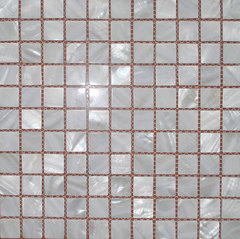
I'm not sure if I look in front of them or through them to do it... It requires a lot of focus to do. I can usually only do it for a few seconds (maybe 10 or 15 at the most) at a time before I lose focus. I probably haven't done it in years too, simply because the tiles that I used to use were torn down with a house when it was rebuilt.
The result of doing it to these tiles would be seeing a big white tile instead of many little tiles. Of course, you only see it while you focus. If I lose focus then it goes back to normal.
I used to have a weird astigmatism when I was a kid, if I looked at a power line against the sky with my head upright, I'd see a ghostly double of the wire slightly above the true position, when I turned my head sideways, the images would merge.
I don't know if it's an astigmatism, but I recall being able to see doubles of power lines as well and being able to manipulate them by focusing to various distances. I could make them merge and also double the other way with focus. I think turning my head would also move them. I figured that was normal... 
I've noticed that most people who find out I'm an optometrist ask me about contact lenses although I haven't had a contacts related question on this thread yet. Different demographics you think?
I'm mildly interested in contact lenses, but they seem like such a pain. I can't imagine putting them in and taking them out every day. In fact, I'd probably forget a lot. If not to put them on, certainly to take them off (by the time I go to bed I'm dead tired, and these days usually have 5 or 6 beers in me). I imagine it would be bad to forget them in while you sleep? I've heard of people having to readjust them on the fly too (i.e., out and about). That can't be fun. Is there some secret for getting them in that would be less frightening?
Oh, here's another question. I always have "sleep" in my eyes (that white stuff that is excreted from the inner corners of the eyes). I wash it out in the morning, but my late-morning there's more of it... Even when I get off work in the evening there seems to sometimes, if not all the time, be more. Is this normal?
I also have trouble opening my eyes full. For the longest time I couldn't even do it. "Fully open" looked like they were barely open at all. I couldn't open them more. Now I seem to have beaten that somewhat, but in their relaxed state I think they're still quite closed. Is there any simple explanation for that or a way to "fix" that if it should be fixed?
I can say right now that my eyes (and indeed my whole body) are probably under-hydrated, so I guess that might contribute... Though lately I've been drinking much more water (in the past I wouldn't ever drink pure water; the only water I'd get was from soda/pop). Now I keep a case of bottled water on my desk at j0rb, which I drink instead of alternatives.
I have my first progressive lenses now and I'm not very happy with them. Even though I didn't pick the cheapest ones available, the sharp field is a bit too narrow. It's amazing how one can see sharp at any distance just by finding the right spot on the lense to look through. But at some occasions I'd need a wider sharp field, like when reading notes on the music stand when I play the saxophone in big band. I can't turn my head just to find the sharp spot.
If you look at the lens, there are some symbols faintly imprinted on it. There should be 2-4 on each lens, some of them will be numbers. Can you see them? Some progressives are better than others, if you can see the letters, I can give you more info on what lenses you have and how it ranks.
Sometimes, when I spend a long time (more than an hour uninterrupted) focusing on reading something up close (either an actual paper book, or on a laptop), my eyes seem to "get used to the distance", and when I stop doing whatever I was doing, I have problems focusing my vision on more distant objects - for example when trying to read something on a blackboard. The difference is not that big, but I certainly notice my far vision being more blurry than usual for a few minutes. Is that normal?
Yes, normal. More so if you're older (about > 35yo). Sometimes it is due to being long sighted though. Long sighted people can still be 20/20 and need specs. Check with your optom.
I'm just wondering why so many people have bad eyesight, seems like a complete flaw in evolution given eyesight takes up (I think) the largest part of the brain.
If you're short sighted, your close up vision is better than those who aren't. Maybe it is the change in lifestyle from hunter gatherer to... programmers.
The result of doing it to these tiles would be seeing a big white tile instead of many little tiles. Of course, you only see it while you focus. If I lose focus then it goes back to normal.
I'm guessing it is because the cones in your eyes are becoming desensitised and your brain is altering the perception. Much like when you go out in the bright sun without sunnies, come in doors where its darker and you see blotches. Or those internet pics where you stare at them for ages and look at a blank wall and see Jesus or another image.
I'm mildly interested in contact lenses, but they seem like such a pain. I can't imagine putting them in and taking them out every day. In fact, I'd probably forget a lot. If not to put them on, certainly to take them off (by the time I go to bed I'm dead tired, and these days usually have 5 or 6 beers in me). I imagine it would be bad to forget them in while you sleep? I've heard of people having to readjust them on the fly too (i.e., out and about). That can't be fun. Is there some secret for getting them in that would be less frightening?
Contacts only work if you REALLY want them. The initial "pain" gets better as you get better at handling them. It is all practice. There are contacts approved for sleeping in, although your risk of infection is still higher than when you don't sleep in them. Stats at the moment:
1/10000 who don't wear contacts get eye infections per year
4/10000 who wear contacts get eye infections per year
20/10000 who sleep in contacts get infections per year
If you have to adjust them on the fly then they either aren't fitted well or haven't been looked after. This could mean over wearing them on a daily basis or not disposing of them at appropriate times.
And there is no secret. The secret is practice, like everything else in life.
Oh, here's another question. I always have "sleep" in my eyes (that white stuff that is excreted from the inner corners of the eyes). I wash it out in the morning, but my late-morning there's more of it... Even when I get off work in the evening there seems to sometimes, if not all the time, be more. Is this normal?
I'd say no but it depends on how much you get and what environment you work in too. Can be due to lots of things so see your optom for more details as he/she can see your eyes under a microscope to check for problems.
I also have trouble opening my eyes full. For the longest time I couldn't even do it. "Fully open" looked like they were barely open at all. I couldn't open them more. Now I seem to have beaten that somewhat, but in their relaxed state I think they're still quite closed. Is there any simple explanation for that or a way to "fix" that if it should be fixed?
You mean like 1/2 closed like... Garfield's (the cat)? Usually age related, but also other problems (e.g. long term infections). Again, see your optom to check it out. If it interferes with vision, surgery is performed to lift those lids.
Probably nothing special, but I discovered long ago that if I focus on something (i.e., tiles) long enough that I could make the lines between them "disappear". Is there any explanation for that? Is that bad for your eyes?
That's simply the retina getting fatigued, once you move your eyes, each retinal cell sees a different color so you can see it again. If you'd closed your eyes or looked at a blank area you'd have see a virtual "negative" image so to speak.
http://www.harmsy.freeuk.com/thing.html
I used to hunt foxes as a kid to make money, and if I saw some dot on a hillside a kilometer or two away that I didn't remember being there before (a large rock or something) I'd stare at that exact point for 10 or 15 minutes to see if it would move, and everything would fade out.
What are the odds I have some easily curable eye symptom that could be fixed? I've had great vision since forever, but lately (last few years) my eagle eye has been decreasing to something closer to 20/20. Should I be worried?
Should I be worried?
About as worried as me I suppose. I had really good long distance vision, and good near vision. These days I can't read things as far away anymore. I used to be able to read the destination on a bus when it was hundreds of meters away, these days I can't do that so well.
Sounds the same as me. And after staring at a computer screen or cell phone screen for too long (if I forget to look away every 15 minutes or so and let my eyes focus elsewhere) my eyes will become fatigued (at least that's what I guess happens). I can still see up close fine, but looking to the distance is harder.
One thing I do wonder about, though, is seeing a slight double vision. At night time, I can faintly see a duplicate copy of the lines on the road/lights on other cars/reflective signs. Don't know if that's normal or not, but it only seems to happen when there is a sharp dark/light contrast with what I'm looking at.
I wonder if that's why I like to be in the dark. I walk around the house in complete darkness. The lights bother me. I find it annoying that the lights are on at j0rb. I wish I could turn them off (or better yet, I wish I had my own office).
Everyone says that it's bad for your eyes to have the lights off, but I find it's distracting when the lights are on (makes it harder to focus on a TV or computer monitor screen). It's mostly artificial lights that I don't like. Imperfect ones. Really bright ones that light the room up entirely are OK. Otherwise, I'd prefer the room to be dark.
Heh, I find after I've been inside for a little too long, and I go outside, if its a bright sunny day, I get blinded, and fairly extreme pain for a good while when I'm outside. Quite painful.
I j0rb in the upstairs of a garage with zero windows (so the only light is artificial, and not very bright), though I'm a software developer. When any of us walk outside on a Sunny day at lunch we're all blinded. I actually kind of like it, though it's also a little painful for that split second.
I actually kind of like it, though it's also a little painful for that split second.
Try a couple of minutes 
Yeah, I suppose it can last a few seconds, but usually by the time we're around the building (probably 20 - 30 seconds) we've adjusted well enough. Then again, we generally get into a car then, sometimes with tinted windows, so it could just be that we're shielded at that point.
Heh, I find after I've been inside for a little too long, and I go outside, if its a bright sunny day, I get blinded, and fairly extreme pain for a good while when I'm outside. Quite painful.
Ever heard of sunglasses?
You can take them off after a few minutes too, if it's not bright enough for them.
I don't have a question, but I'd like to go for the high score.
Left: -8.5 and an astigmatism
Right: -8.0
I wore glasses for years when I was younger even though I got horrible headaches. When I started driver's ed, I didn't feel safe driving in glasses so I got contacts. The first day with contacts was like being in a whole new world, I had no idea people saw things so crisply and "close". I remember it was cloudy and it looked like I could reach out and touch the clouds.
Actually, on second thought, I do have a question.
When I'm not wearing my contacts, if I'm in a dark room and I stare at a concentrated light (like the status LED for my monitors) I can see what look like cells moving around like I'm looking in a microscope. If I blink, they all rush in the same direction and then back again (though to new positions) as I open again. Also, I scratched my cornea once and I could see the scratch using the same method.
What the hell is going on? Am I really seeing the surface of my eye? I asked an optometrist about this one time and he treated me like I was crazy, so I just shut up about it.
Ever heard of sunglasses?
You can take them off after a few minutes too, if it's not bright enough for them.
I actually hate wearing any kind of glasses. They feel super heavy on my nose, and it annoys the crap out of me.
I'm an optometrist
Holy crap. This is already at page 4 by the time i saw this.
Anyways, I'm currently doing research on diabetic retinopathy and I'm trying to develop a tool for (semi) automatic segmentation and analysis. Is there any thing I can develop for blood vessel imaging that you would possibly find useful?
Holy crap. This is already at page 4 by the time i saw this.
Still on the first page for me. When a thread gets to 4 pages, then its real serious business.
I used to be able to read the destination on a bus when it was hundreds of meters away, these days I can't do that so well.
Seeing stuff is partly practice, if you spent the majority of the time looking at distant scenes as a kid, your brain would interpret the granularity of retinal coarseness better than now, when you spend so much time at a computer.
Still on the first page for me. When a thread gets to 4 pages, then its real serious business.
Moose..
What are the odds I have some easily curable eye symptom that could be fixed? I've had great vision since forever, but lately (last few years) my eagle eye has been decreasing to something closer to 20/20. Should I be worried?
Yes and no. 20/20 is awesome vision. Anything better and you're lucky. However, as an optom we're more interested in the CHANGE in your vision. What is causing the decreased vision? Is it just a natural change in the eye or disease related? See your optom if you're interested. Definitely see optom if it gets worse.
One thing I do wonder about, though, is seeing a slight double vision. At night time, I can faintly see a duplicate copy of the lines on the road/lights on other cars/reflective signs. Don't know if that's normal or not, but it only seems to happen when there is a sharp dark/light contrast with what I'm looking at.
If you close one eye, is it still double? Does it looks more like a "drop shadow"? If so it may mean you have some astigmatism. Or possibly lots of other things. Get it checked out if it gets worse.
I wonder if that's why I like to be in the dark. I walk around the house in complete darkness. The lights bother me. I find it annoying that the lights are on at j0rb. I wish I could turn them off (or better yet, I wish I had my own office).
What's a j0rb?
If lights bother you it could possible be because you have light eyes, a mild prescription, massive pupils + lots of other things. Do your pupils react to light? If not then you've got problems. See your optom.
Everyone says that it's bad for your eyes to have the lights off,
I remember my lecturer at uni summarising an experiment done in the 70s where they had chicks, put them in complete darkness. They all became short sighted. Make what you want of this.
When I'm not wearing my contacts, if I'm in a dark room and I stare at a concentrated light (like the status LED for my monitors) I can see what look like cells moving around like I'm looking in a microscope. If I blink, they all rush in the same direction and then back again (though to new positions) as I open again. Also, I scratched my cornea once and I could see the scratch using the same method.
You're seeing inconsistencies in your tear film. So when you blink you should see the dots move in the vertical direction. This is normal.
Oh. And you're not crazy. This is 1st year optom stuff.
I actually hate wearing any kind of glasses. They feel super heavy on my nose, and it annoys the crap out of me.
May just need them adjusted to fit. Your optom can fiddle with nose pads and temples to get it just right.
Anyways, I'm currently doing research on diabetic retinopathy and I'm trying to develop a tool for (semi) automatic segmentation and analysis. Is there any thing I can develop for blood vessel imaging that you would possibly find useful?
Whoa, nice! If it was accurate and if non professionals could use it. Would be excellent screener or in those hard to reach places where you can't find optoms or ophthals, someone could be trained to just use it and report if it detects a problem. Would be excellent as diabetic retinopathy is a massive problem.
Seeing stuff is partly practice, if you spent the majority of the time looking at distant scenes as a kid, your brain would interpret the granularity of retinal coarseness better than now, when you spend so much time at a computer.
Or you just need specs. Or you have an eye disease. See an optom to make sure. As I stated above, the reason for the change in your vision is important.
Keep it coming!
When the muscles around the lens are relaxed, we focus far away, right? And when we focus on objects very near, we tense the muscles, right? So being near sighted I can't relax the muscles more than fully and it still is not enough. The lense is too convex or the retina is too far away. But how come young people need convex glasses, say around +1 - +1.5? I understand lenses like +5. But +1? It's only a slight increase of tension of the muscles. Or so I would think.
If you close one eye, is it still double? Does it looks more like a "drop shadow"? If so it may mean you have some astigmatism. Or possibly lots of other things. Get it checked out if it gets worse.
I actually don't remember. I do know I've closed eyes, but I don't remember the result. Sometimes it is really noticeable, other times it isn't. Possibly just eye fatigue/general tiredness/dry eyes or something?
I've also noticed that just my left eye is slightly red-green color blind. Is having one color blind eye normal?
Keep it coming!
So theres nothing strange about blinding, searing pain when I go out into the daylight? Even though it can last for a couple minutes?
I've had that problem since I was in elementary. After a few hours inside in the building, I'd go out for recess and OH GOD THE PAIN It has to be a relatively bright day mind you. But I don't recall anyone else having quite such a problem with it.
Know any magickal treatments for "visual snow" that wikipedia does not?
Is kale, or other foods high in lutein and zeaxanthin, really good for your eyes?
Is this guy crazy?
Is this guy [www.healingtheeye.com] crazy?
Judging from his way of using huge font sizes, bold and underline, lots and lots of text, yes.
But how come young people need convex glasses, say around +1 - +1.5? I understand lenses like +5. But +1? It's only a slight increase of tension of the muscles. Or so I would think.
Yup you're right. +1.00 isn't a massive prescription. However, there are other systems in the eye which are inter-related. For example, theres the convergence system (where you eyes move inwards and outwards) which is closely linked to the focusing system you correctly outlined.
It is normal that when you accommodate (or tense the muscles around the lens) to look up close, your eyes turn in. This is so both the focusing and the eyes are pointed at the same plane.
However, even small prescriptions (say +1.00) can throw this system out and you can get mild headaches or lose concentration when reading. Blur is usually another symptom if you persist with the close work.
This is just one example of many in which +1.00 would be prescribed.
I actually don't remember. I do know I've closed eyes, but I don't remember the result. Sometimes it is really noticeable, other times it isn't. Possibly just eye fatigue/general tiredness/dry eyes or something?
Very possible. Could be a whole host of things. Your optom would be able to diagnose it.
I've also noticed that just my left eye is slightly red-green color blind. Is having one color blind eye normal?
How did you come to this conclusion? I'd say this is quite odd as red/green colour DEFICIENCY (no one is really colour BLIND) is hereditary and so occurs in both eyes, usually equally.
Some eye diseases cause changes in colour vision (e.g. cataracts) and so do some medications. Better check with your optom.
So theres nothing strange about blinding, searing pain when I go out into the daylight? Even though it can last for a couple minutes?
Oh sorry I missed your question! No it is not normal. Pain is always bad. See your optometrist and if your eye health checks out, get some good quality sunglasses.
Know any magickal treatments for "visual snow [en.wikipedia.org]" that
wikipedia does not?
Nope.
Is kale, or other foods high in lutein and zeaxanthin, really good for your eyes?
It is currently available in pill form:
http://www.blackmores.com.au/products/lutein-vision
and is recommended by ophthalmologists for people who have macula degeneration or are suspects.
There are other treatments for macula degeneration
http://www.lucentis.com/lucentis/index.html
...which is an injection into the eye and studies have shown some improvment in vision.
Ah, I was worried you disappeared!
Oh sorry I missed your question! No it is not normal. Pain is always bad. See your optometrist and if your eye health checks out, get some good quality sunglasses.
If you see my follow-ups about it, Its been happening since I was a child. I've had several/many checkups since then. Course I never mentioned it. I'm also rather used to Dr.s and professionals just saying "Its fine, no problem" for any a number of things I manage to talk about. So I don't often feel like talking about things that only bug me sometimes.
See your optometrist and if your eye health checks out, get some good quality sunglasses.
Glasses of any kind bug my nose. It feels like theres 500g sitting on it when its only a very light pair of glasses. Its really annoying.
If you see my follow-ups about it, Its been happening since I was a child. I've had several/many checkups since then. Course I never mentioned it. I'm also rather used to Dr.s and professionals just saying "Its fine, no problem" for any a number of things I manage to talk about. So I don't often feel like talking about things that only bug me sometimes.
If you don't mention something, usually professionals don't check it. The standard eye exam only checks for common problems (e.g. blurry vision) and common eye diseases (e.g cataracts).
It may be something rare or unusual which is not detected by standard eye exams. Next time you see your optometrist, let him or her know about it.
Glasses of any kind bug my nose. It feels like theres 500g sitting on it when its only a very light pair of glasses. Its really annoying.
More so than the pain?
More so than the pain?
The pain does go away. But the annoyance of glasses does not But yeah I'll talk about the pain next time I go in.
I remember when I was younger, I could often notice a very different perception of colours in my left and right eye. Sometimes I still can. I think it has to do with the simple fact that both eyes have had a slightly different amount of light (and maybe light of different colour) for some minutes. Say you have a bright window to the left of you and the left eye is therefore exposed a bit more than the right one. Move from this position to looking at something colourful where both eyes are very evenly exposed. Switch rapidly eyes by covering them with the palm of your hand and you will notice a big difference in colours. The effect lasts only a minute or so. And you don't notice the different while looking with both eyes.
This might be a white balance thing, too. The eyes are temporarily balancing differently. In Finland we have this special moment we call "the blue moment". It's when there's snow outside and it's cloudy. When you are outside, you might notice that everything is blue, but especially when you're inside, surrounded by electric light (tungsten bulbs) and happen to look out from the window, you see an extremely blue colour on everything. It only shows how much our eyes adapt to the white balance. And I guess the eyes can do it separately to some extent.
I remember when I was younger, I could often notice a very different perception of colours in my left and right eye. Sometimes I still can. I think it has to do with the simple fact that both eyes have had a slightly different amount of light (and maybe light of different colour) for some minutes. Say you have a bright window to the left of you and the left eye is therefore exposed a bit more than the right one. Move from this position to looking at something colourful where both eyes are very evenly exposed. Switch rapidly eyes by covering them with the palm of your hand and you will notice a big difference in colours.
Ah right. This could be due to the saturation of the receptors in the back of the eye. When you constantly shine a light in an eye or just stare at a particular picture, you get a desenitisation of the recpetors in the back of the eye (this is the eye adapting to a constant image), much like the burn in effect you get on old tv screens when a picture is shown for too long. This is temporary and should revert back to normal within seconds.
So say you shine a light in an eye (a small one) for a few seconds, that saturates the cones in the back of the eye, they become less sensitive to light. If you turn off the light and look away, you see an afterimage of the light which looks a different colour.
This effect can be used for optical illusions such as
http://en.wikipedia.org/wiki/Lilac_chaser
Way cool.
When I was a kid we use to stair at a light in front of one of the churches. One of those sign illuminating ones that are ultra bright. We called it "going to purple world" because everything turned purple on us for maybe a minute or so.
.. am I going to get eye cancer? Or is that why I've got visual snow?
Having worn glasses for way over 20 years, I love it how people who never have complain about the annyonance of glasses.
Having worn glasses for way over 20 years, I love it how people who never have complain about the annyonance of glasses.
I have a pair actually. But its such a low prescription it seems more like a couple pieces of glass. The Optometrist also said I could skip them if I didn't think I really needed them, so most times I don't use them at all.
Is "optometrist" synonymous with "eye doctor"?
Here's a new question. I just recently got some new high resolution fundus images and the light reflectance inside the veins is causing me a lot of difficulty. Most of the reflection is in the red channel (of course) but there is still sufficient change in the green channel to screw things up. Is this a really common problem because so far I know that my data has been "hand selected" by experts for all kinds of various reasons.
Is "optometrist" synonymous with "eye doctor"?
edit:
got distracted by something at work...
I was going to say 'essentially yes'.
That would be an ophthalmologist.
How did you come to this conclusion?
I closed one eye and did a red-green color blindness test. I think I've always been this way -- I haven't noticed it getting worse.
Is "optometrist" synonymous with "eye doctor"?
Hell no. For example in my case, due to my esotropia optometrists are not allowed to prescribe me glasses, I must always see an opthalmologist, which is about twice as expensive as seeing an optometrist.
Then there's also opticians, who actually manufacture the glasses.
When I was a kid we use to stair at a light in front of one of the churches. One of those sign illuminating ones that are ultra bright. We called it "going to purple world" because everything turned purple on us for maybe a minute or so.
See the older posts about saturation of receptors. It is just above your post.
Is "optometrist" synonymous with "eye doctor"?
If by doctor you mean my name is "Dr Ly" then sadly no. In Australia, optometrists (who have a Bachelor of Optometry) are just plain old Mr/Ms/Mrs. Unless you do a phD of course.
In America, optometrists graduate with a Dr in front of their names. This also means I cannot practice in the US with my degree, even though we do about the same thing.
Ophthalmologists who do the surgery for the eyes are doctors as they do their Medicine degree before becoming ophthals.
Here's a new question. I just recently got some new high resolution fundus images and the light reflectance inside the veins is causing me a lot of difficulty. Most of the reflection is in the red channel (of course) but there is still sufficient change in the green channel to screw things up. Is this a really common problem because so far I know that my data has been "hand selected" by experts for all kinds of various reasons.
The reflections would probably mean your data came from young patients. Younger people have more reflective fundus from the "inner limiting membrane". Can't do much about it sorry. Older patients tend to lose these reflections.
I closed one eye and did a red-green color blindness test. I think I've always been this way -- I haven't noticed it getting worse.
Which colour test did you do? Just the standard Ishihara (confetti) test?
Hell no. [www.medicinenet.com] For example in my case, due to my esotropia optometrists are not allowed to prescribe me glasses, I must always see an opthalmologist, which is about twice as expensive as seeing an optometrist.
Then there's also opticians, who actually manufacture the glasses.
In Australia, Optometrists do most of the work for strabs, especially esos which are relatively easy to fix without surgery. When surgery is required or preferred by the patient, ophthalmologists are involved.
When people see ophthalmologists, they ophthal usually does the surgery then the patients are passed onto orthoptists who deal more with the vision training side of things. Orthoptists cannot write prescriptions though.
In Australia, the people who make the spectacles are called "dispensers".
Opticians is not a term used in Australia a lot. But if it is, it is used as an all encompassing term for anyone to do with the eyes.
Which colour test did you do? Just the standard Ishihara (confetti) test?
The one where you have to read the numbers in the circles. My one eye only fails on the harder ones -- so it's not so bad.
In the UK, I'm fairly sure we use 'optician' to refer to the person who does the tests and so on, i.e. what you call an optometrist. It might be technically incorrect but we all do it
Oh, question - is it true that the genes leading to colour blindness in men tend to lead to 4D colour perception in women? I definitely heard it somewhere, but last time I mentioned it to someone, they didn't think it was true. If it is true, it must be quite a curse; TV screens and the like would never live up to the real world.
I guess Matthew should give you a custom title because you have been pretty helpful around (^.^)
I am 31 and my eyesight is still changing. Two years ago it was around 5 in each eye, and now it is 7. Fault is kind of mine, though, I don't go often to the doctor, and now I am doing something nobody should do: during day I use my old lenses, and during night, the new ones. Playing with two different graduations surely makes my eyes tired faster. Also, do wearing smoked (almost black, no idea how they are called in English, imagine sunglasses but not as black) lenses during night affect eyesight in the long term?
Is there anything that, long term, can damage eyesight, like listening to loud music can do to your eardrums?
4D colour perception
WTF is that? I've seen the illusion where a red square on a blue background seems to float "above" the background, because the chromatic aberration of the eye makes the red seem closer, but I thought that worked for both sexes.
I think Bruce is talking about women who se a 4th genuine colour. Normal colour sight is based on the RGB model, believe it or not. We have red, green and blue cones in the retina. Natural visible light has all wave lengths between 400 and 700 nm (correct me on the actual values) but our RGB cones get trigged only on three different wave lengths, kind of. So when we see a yellow wavelength, our red and green cones get triggered (they are not that picky, there are overlapping bandwidths for red and green cones). So it's not a big deal if we look at a monitor, which emits red and green together and not real yellow. Unless we have yellow cones in the retina and have learned to percept the real yellow wavelength as yellow. In that case the red-green on a monitor will look like something else.
How do you know that what I've been taught to call "green" wouldn't be what you would call "red" if you could perceive what I see?
You would have to define what "your perception" and "my perception" is before you imagine us switching them. Should we switch retinas? Or the nerves? Or any part of the brain? I'd imagine everyone of us has a certain distribution of the wavelengths for the three different cones and they just happen to be somewhat at red, green and blue. But I guess they differ a bit. I don't think switching retinas would actually mean that the red and green would switch places, like when switching the R and G lines in a component video cable. I've noticed that what people think as perfect grey on a monitor, I find a bit blueish. Because it's not "real grey" consisting of all wave lengths, but just a somewhat even mix of the R, G and B of the particular wavelength of that particular monitor, my set of cones and their corresponding wavelengths might differ a bit from the average.
The brains simply receive three different signals (plus the "luminosity" from the rods) and we learn to make sense out of it. I guess if retina transplantations would be possible, it would feel like slightly screwing around with the R, G and B curves in a graphic editor. Or even twisting the hue value a bit. You get slightly funny colours, but soon you get used to it. Like this:
{"name":"601576","src":"\/\/djungxnpq2nug.cloudfront.net\/image\/cache\/8\/3\/8327ef03443868a08b548348c1935c04.jpg","w":300,"h":233,"tn":"\/\/djungxnpq2nug.cloudfront.net\/image\/cache\/8\/3\/8327ef03443868a08b548348c1935c04"} {"name":"601577","src":"\/\/djungxnpq2nug.cloudfront.net\/image\/cache\/9\/8\/98f4ca3cebc1afe8c95162d9c36d7b3f.jpg","w":300,"h":233,"tn":"\/\/djungxnpq2nug.cloudfront.net\/image\/cache\/9\/8\/98f4ca3cebc1afe8c95162d9c36d7b3f"}
The one where you have to read the numbers in the circles. My one eye only fails on the harder ones -- so it's not so bad.
Thats the ishihara. It is only used as a screening tool and so cannot be used to determine how "bad" an eye is at colour perception. Other tests are better. See if you can get yourself on an anomaloscope (http://www.neuronresearch.net/vision/files/newnagel.htm). This is the be all and end all of putting your colour vision on a scale.
Oh, question - is it true that the genes leading to colour blindness in men tend to lead to 4D colour perception in women? I definitely heard it somewhere, but last time I mentioned it to someone, they didn't think it was true. If it is true, it must be quite a curse; TV screens and the like would never live up to the real world.
I have no idea. At a guess, I don't think so? The color deficiency gene is recessive and is on the X chromosome and so if you're female, if you have one of these it would not show as the dominant (normal) gene will be there.
Obviously 2 recessive colour deficient genes on X chromosomes would mean the female has colour vision problems.
Is there anything that, long term, can damage eyesight, like listening to loud music can do to your eardrums?
Most common problem is UV exposure and for most of us it is from the sun. Get some sunnies (good ones which fit well) and wear them often, even on overcast days.
Also, do wearing smoked (almost black, no idea how they are called in English, imagine sunglasses but not as black) lenses during night affect eyesight in the long term?
Not to my knowledge. Won't help with vision much though, but will help you look more like P.Diddy.
How do you know that what I've been taught to call "green" wouldn't be what you would call "red" if you could perceive what I see?
Doesn't really matter in reality as we both have a common object to look at and we both agree to call it the same thing.
The brains simply receive three different signals (plus the "luminosity" from the rods) and we learn to make sense out of it. I guess if retina transplantations would be possible, it would feel like slightly screwing around with the R, G and B curves in a graphic editor. Or even twisting the hue value a bit. You get slightly funny colours, but soon you get used to it
Also, the retina is not the only part of the visual system. Don't forget the visual pathways to the brain, and the media before the retina (cornea, lens, vitreous, pupil sizes). The brain's interpretation of what is on the retina is also important. There are also "ganglion cells" which gather information from groups of cones/rods which further complicates matters.
Normal colour sight is based on the RGB model, believe it or not. We have red, green and blue cones in the retina. Natural visible light has all wave lengths between 400 and 700 nm (correct me on the actual values) but our RGB cones get trigged only on three different wave lengths, kind of. So when we see a yellow wavelength, our red and green cones get triggered (they are not that picky, there are overlapping bandwidths for red and green cones). So it's not a big deal if we look at a monitor, which emits red and green together and not real yellow. Unless we have yellow cones in the retina and have learned to percept the real yellow wavelength as yellow. In that case the red-green on a monitor will look like something else.
There is a funny thing that colour deficient people do. Say you have 3 colours which are quite similar, but a normal person could differentiate them and say they are "different colours". A colour deficient person may say:
Colour 1 same as colour 2 (putting them side by side to compare)
COlour 2 same as colour 3
But Colour 1 and 3 are different when they compare them side by side.
Wierd eh?
I guess Matthew should give you a custom title because you have been pretty helpful around (^.^)
Can I have the title of "Eye Checker"?
I noticed a weird illusion when I was a kid, it seems the rods that see bright objects have a quicker response time than the cones. If I'd move a flashlight sideways, it'd appear that the brightly lit shield thing would precede the part that was lit by ambient light only. Has anyone ever seen this before?
{"name":"601578","src":"\/\/djungxnpq2nug.cloudfront.net\/image\/cache\/0\/8\/08a8b62811f820cdfe019b816bf2aad2.png","w":800,"h":600,"tn":"\/\/djungxnpq2nug.cloudfront.net\/image\/cache\/0\/8\/08a8b62811f820cdfe019b816bf2aad2"}
I'm trying it with my pentorch and it doesn't seem to do what you're describing. How big is your torch, how fast are you moving it, is the end red like the picture and what is the background illumination like?
It held two 'D' cells, the background illumination was way too dark to read but you could walk around without trouble (maybe like 3/4 full moon), the end was red and probably bright enough to read words right next to it, and I wasn't following it with my eye. E.g. I was looking at a spot on the ground and moving the flashlight around.
[EDIT]
I was probably moving it about 4 hand widths per second.
I'm trying it now with a single LED keychain with my finger over the end (looks red from the blood) and a regular flashlight with my hand on the end, I can't make it do this now either. I'll try again if I have to get up in the dark later after my eyes have adapted to darkness.
I've seen the following illusion. A pendulum a is oscillating above an object b. Because of the two strings holding the bead, the oscillation is back and forth, no rotation. The viewer looks at the pendulum through a smoked glass screen, but there's a gap for either eye. The eye looking through the glass sees a darker image and therefore there's a slight delay in the perception. Which makes the bead rotate above the object. And when the viewer moves sideways to cover the other eye, the rotation reverses.
{"name":"601579","src":"\/\/djungxnpq2nug.cloudfront.net\/image\/cache\/7\/4\/74ae3d9c24f05b41407227fd290de0d5.png","w":268,"h":321,"tn":"\/\/djungxnpq2nug.cloudfront.net\/image\/cache\/7\/4\/74ae3d9c24f05b41407227fd290de0d5"}

I have Another question.
If i try and read anything on the bus. text books newspager ,subtitles i get very dizzy.
reading dose not seem to affect other people what makes then different then me.
what is this? Is it bad or good? and how do i fix it if bad?
piccolo: its a common phenomenon. Many people get sick/dizzy if they read while in a moving vehicle.
An Ly: so, regarding strabismus. So it can be fixed/manager even if you are older than 8? I'm currently 18. Just want to know if its even worth trying.
I'll try again if I have to get up in the dark later after my eyes have adapted to darkness.
The cells that have better dark vision work a lot slower. So I can see how the light part of the light will appear to move a little faster. Its just that after you've adjusted to the darkness most of your eyes detectors are tuned for low light, and will lag out compared to any that aren't.
piccolo: its a common phenomenon. Many people get sick/dizzy if they read while in a moving vehicle.
So dose this mean I'm weak or is this a side affect of being to strong in another area?
If its because i am weak let me know how to train my eyes so I'm not affected.
I have worn glasses from grade in primary school. Because i used to take a guys glasses in my class and try them on.
I have Another question.
If i try and read anything on the bus. text books newspager ,subtitles i get very dizzy.
reading dose not seem to affect other people what makes then different then me.
what is this? Is it bad or good? and how do i fix it if bad?
This is because your eyes are sending a different signal than the rest of your body. Your body is signaling to the brain that you're moving. Your eyes tell your brain that you're not moving because you're looking inside the bus, which moves with you, instead of outside which does not. I imagine that your brain can be trained to deal with this, but it's a natural response so you shouldn't feel bad about it. Your brain is basically confused and the natural response when that happens is to feel disoriented (i.e., dizzy). Many people actually feel sick because of this (it's called motion sickness).[1]
I only tend to get sick in a vehicle if I'm super hungry. Worse if I'm also reading.
If its because i am weak let me know how to train my eyes so I'm not affected.
Yes, your weakness is indeed shameful. The only solution is to read HARDER and LONGER until your body can't take it anymore so that you throw up. Rinse and repeat three times, then your body will learn to fear you because you are strong and thus the body will not dare to get dizzy ever again.
Hello An Ly.
I just have a few questions.
I do yearly visit to medicine-of-work to check if everything is OK, and last year I had a 12/10 near/far eyesight.
That year, on the same machine, even after trying two time, it looks like I now have a 13/10 eyesight.
Notice that I would not complain about gaining eyesight, I just want to hear some explanations on the topic.
Also, I want to have your point of view about things like "Dr NoName Eye Training Game" or so.
piccolo, just read more and more until you get used to that. I can travel by bus, watching videos or reading, even when sitting opposite to the bus movement. However, got friends who can't handle that.
Just looking at my left and I see someone who can't read in a car.
I'm pretty badly nearsighted (I don't remember the exact rating; -6 something, I think), and in my mid-twenties. I haven't had my eyesight checked in a while. How often should I do so, and/or get new glasses?
Don't give up that easy, An Ly ! :-p
If i try and read anything on the bus. text books newspager ,subtitles i get very dizzy.
There are 2 main systems in the human body which affect balance. One is your visual system. If you see the ground below you and the sky above, probably means you're upright. This is a simple example but can be extrapolated to work with common objects (like the sun, buildings etc).
The other system is the semi circular canals in your ear. These canals are semi circular (hence the name) and you have 3 of them in different orientations. They contain fluid and when you move or adjust your posture, the change in the fluids tell your brain your orientation or movements.
If these 2 systems are telling the brain the same thing, then you're all good. If they are mismatched, the brain doesn't like it, sending pain signals (headaches).
When you're reading the 1st system says you're not moving. But in a car your semi circular canals say you are. This disparity causes your dizziness. Some people are more sensitive to others.
I haven't heard of ways this can be trained. However, from personal experience, I had to do last minute study on the rides to uni and the first few weeks I got dizzy. But due to my lack of studying early I had to persist. By the end of 1st semester I could read on the bus.
Some people tell me if you pull the book further from your face you can see the moving road in the periphery of your eye and this makes it better. No study I know of proves this though.
so, regarding strabismus. So it can be fixed/manager even if you are older than 8? I'm currently 18. Just want to know if its even worth trying
18yo is still ok. I would go for it if you really want to. Find a good optometrist who knows what they are doing. If you go to the wrong one you will be wasting your time and money.
When you do find one, follow their instructions. Do not deviate from it even a bit. The training schedule is devised to work for you and even over doing it is bad.
I've found that the most successful patients are the ones who really want to improve.
By the way, do you know what your VA is?
I do yearly visit to medicine-of-work to check if everything is OK, and last year I had a 12/10 near/far eyesight.
That year, on the same machine, even after trying two time, it looks like I now have a 13/10 eyesight.
Notice that I would not complain about gaining eyesight, I just want to hear some explanations on the topic.
I'm not sure if your system of measurement of eyesight is the same as in Australia. In Australia (and US/UK) the way we measure VA (visual acuity) is by reading letters. Then we give it a measurement:
e.g. 20/40, 6/6, 6/18 etc
Lets take 20/40. The first number (20) is the distance to the letter chart (20 ft). The 2nd number (40) is the distance the "normal" person can read it at.
This means 20/40 is not very good vision as the "normal" person can read it at 40ft but you can only read it at 20 ft.
This also means that 20/20 is "normal" vision.
In Australia we use the 6/6 system (metric system).
So I'm guessing 12/10 means your working distance is 12m/ft? Then 13/10 is 13m/ft?
It is an odd way of measuring VA as it means your working distance (distance to the chart) changed every year?
Anyways, VA only a small way to measure vision. Your VA reported is better than "normal" and so improvements which are better than "normal" usually come with being better at guessing (or working out letters) letters when it comes to reading the smaller print. If you practice reading tiny print at the distance, you can improve your VA in minutes.
Also, I want to have your point of view about things like "Dr NoName Eye Training Game" or so.
Like on the DS? I haven't played them so I can't comment, sorry!
I'm pretty badly nearsighted (I don't remember the exact rating; -6 something, I think), and in my mid-twenties. I haven't had my eyesight checked in a while. How often should I do so, and/or get new glasses?
A checkup usually every 2 years is recommended but if you're eyes are changing rapidly then you'll need more regular checkups (maybe yearly).
You should get new glasses when your optometrist recommends it. I know it sounds like we're just trying to make you buy stuff. But if that is the case with your optometrist then you're going the to the wrong one.
How do you know if he/she is just trying to sell you stuff? You can't tell. But rapport helps. If you like the guy/girl then you're usually ok.
In Australia, the Optoms in the big chains (OPSM, Paris Miki etc) usually get a cut of the products sold. Sometimes that can sway their opinion.
But then again, optoms who own independant practices take the whole profit.
Discuss.
The cells that have better dark vision work a lot slower. So I can see how the light part of the light will appear to move a little faster. Its just that after you've adjusted to the darkness most of your eyes detectors are tuned for low light, and will lag out compared to any that aren't.
Can you see the red colour with the experiment? If so then you're also using your cones which are the "detectors" which work in bright light. The detectors tuned for low light (rods) wouldn't see the red colour.
Don't give up that easy, An Ly ! :-p
Give up what?
Can you see the red colour with the experiment? If so then you're also using your cones which are the "detectors" which work in bright light. The detectors tuned for low light (rods) wouldn't see the red colour.
I haven't tried, but I assume thats why you'd get the light part moving faster than the dark part, normal light detectors (cones?) are faster than the rods (no?).
Can you see the red colour with the experiment?
If you're talking about my flashlight story, yes, the red part was quite a bit brighter than necessary to see it was red. I can't seem to remember to try it again when I wake up groggily in the middle of the night to use the bathroom.
Since others here say that it's been known that cones respond slower I'll drop it.
Give up on responding ;-)
In France the system is as following (from what I know):
10/10 is normal vision
Fighters pilots must have at least 12/10, the average have 14/10
Based on how many consults you've answered here, how much money would you've earned already?
My bet: A bunch !! :-p
10/10 is normal, but average is 14/10? Wouldn't that make 14/10 normal? You Europeans make my head hurt.
10/10 is normal, but average is 14/10? Wouldn't that make 14/10 normal? You Europeans make my head hurt.
I think they don't mean normal for a person, but a normal baseline after which you need glasses. Makes sense.
I'd think they meant 10/10 was optimal, but 14/10 was the arithmetic mean after you averaged in all the four-eyed people.
10/10 is normal, but average is 14/10? Wouldn't that make 14/10 normal? You Europeans make my head hurt.
He said that 14/10 was the average for fighter pilots.
So fighter pilots can "read" something at 14 meters that most people would have to be at most 10 meters away?
Thanks Neil for reading me correctly. I exactly said fighters pilots.
Arthur, I don't really know :-( I know that a 14/10 will have a better acuity than a 7/10 viewer thought ;-p
Edit:
From here, it really looks at what we use there.

Edit: that one IS what we use there (sized for a 1280x800 screen, reader at 5 meters):
http://www.opticien-lentilles.com/acuite/acuite_visuelle_15pouces4_1280x800.html
@GullRaDriel: I understood what you said too... That was their fail, not yours.
That was their fail, not yours.
Indeed. When I replied to Baf I failed to re-read what Gull said I just assumed baf actually understood what it was he was talking about I'll try and not make the same mistake in the future.
I've read of color-blind Spider Monkeys having stem cell injections into their eyes enabeling full-color vision. This is a long shot but do you know if any more more progress has been made in this field toward applying this technique to humans?
If you're talking about my flashlight story, yes, the red part was quite a bit brighter than necessary to see it was red. I can't seem to remember to try it again when I wake up groggily in the middle of the night to use the bathroom.
Since others here say that it's been known that cones respond slower I'll drop it.
It is an interesting phenomenon that I can't reproduce. The thing which doesn't sit well with me is that the cones are in your central vision and the rods in the periphery. And if you can see the colour, you're using your cones for both the tip and handle so I don't see how it would be explained in this manner.
Based on how many consults you've answered here, how much money would you've earned already?
In AU, a "full consultation every 2 years) nets me about $57 AUD. There are also other item numbers which give more or less. Average $ per exam would be about $30. You can do the maths.
Note: Consults usually take about 30min.
Arthur, I don't really know :-( I know that a 14/10 will have a better acuity than a 7/10 viewer thought ;-p
Edit:
From here [en.wikipedia.org], it really looks at what we use there.
Edit: that one IS what we use there (sized for a 1280x800 screen, reader at 5 meters):
I don't see the number 14 anywhere. Although the 20/20 system in on the RHS of the chart.
I've read of color-blind Spider Monkeys having stem cell injections into their eyes enabeling full-color vision. This is a long shot but do you know if any more more progress has been made in this field toward applying this technique to humans?
I think the experiment gave the spider monkeys the ability to pass a test which requires colour vision. Which is different from having actual real colour vision.
e.g. There is actually a contact lens which when worn by colour deficient people that allows them to pass the Ishihara colour vision test. However, you won't get the colour sensations everyone else has. You can just pass the test.
This is a good start though but I haven't heard of any trials on humans yet.
I don't see the number 14 anywhere. Although the 20/20 system in on the RHS of the chart.
Scroll down the page. It's going from 1/10 to 16/10 by 1/10 step.
Second link by the way. I'm pretty sure you already took a look at the first one ;-p
It is an interesting phenomenon that I can't reproduce. The thing which doesn't sit well with me is that the cones are in your central vision and the rods in the periphery. And if you can see the colour, you're using your cones for both the tip and handle so I don't see how it would be explained in this manner.
Perhaps the Pulfrich effect is the explanation?